Is Lofoten or Tromsø Better for Northern Lights?
For the aurora itself, neither wins outright: both Lofoten and Tromsø sit inside the auroral oval at a similar latitude, so your odds on any given night come down to weather and solar activity, not which town you picked. The real differences are how you get there and what the daytime scenery gives you in between.
Booking choice: Travel with a guide looking for a clearer patch of sky, with hot drinks during the wait. Discover Svolvær aurora chase
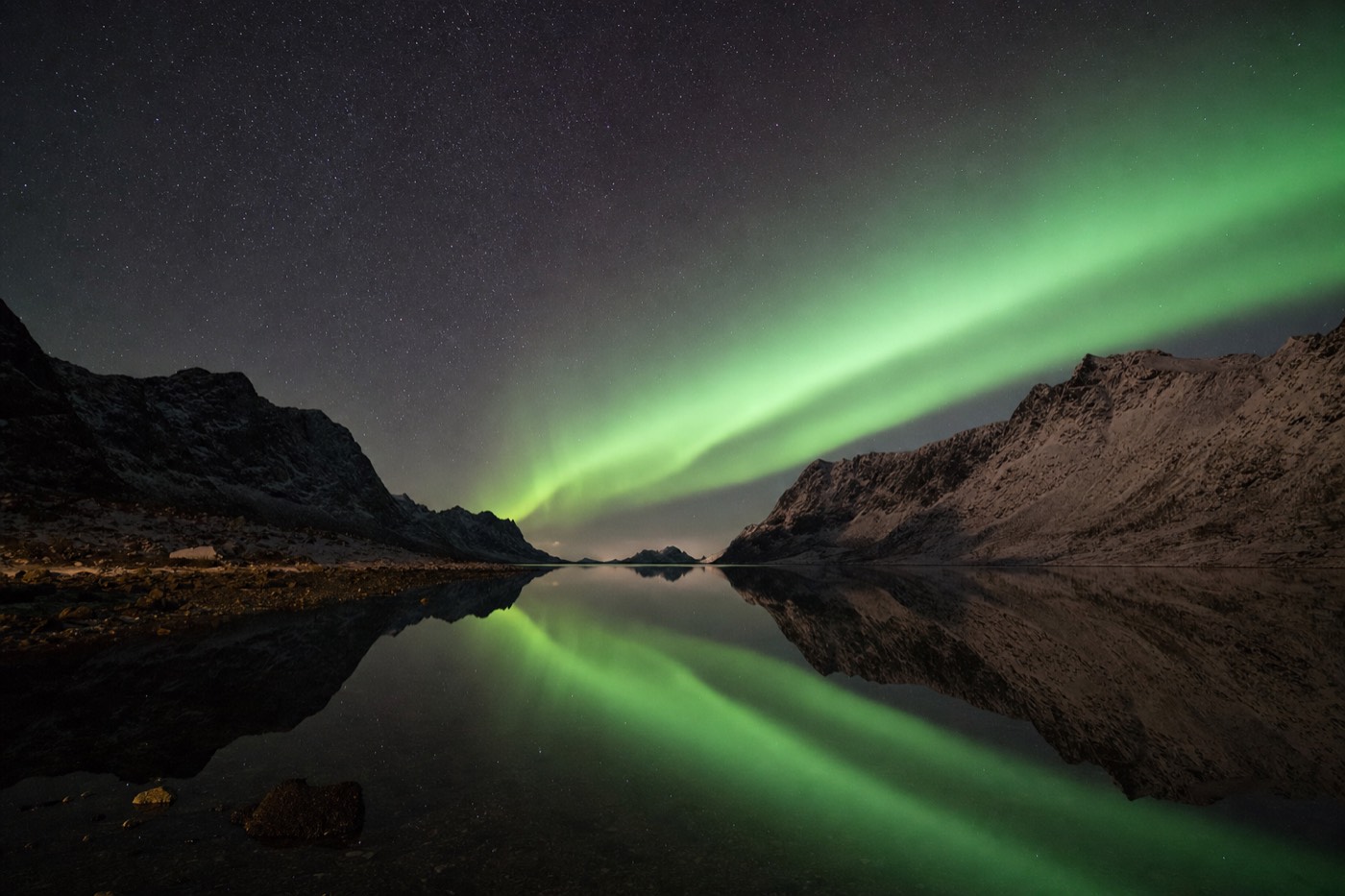
Is one location scientifically better for aurora sightings?
Not meaningfully: Lofoten and Tromsø both sit at a similar latitude inside the auroral oval, the band around the pole where the aurora is most consistently visible, so the underlying physics is essentially the same for both. What differs night to night is local cloud cover, and coastal Norwegian weather is genuinely changeable in both places regardless of season.
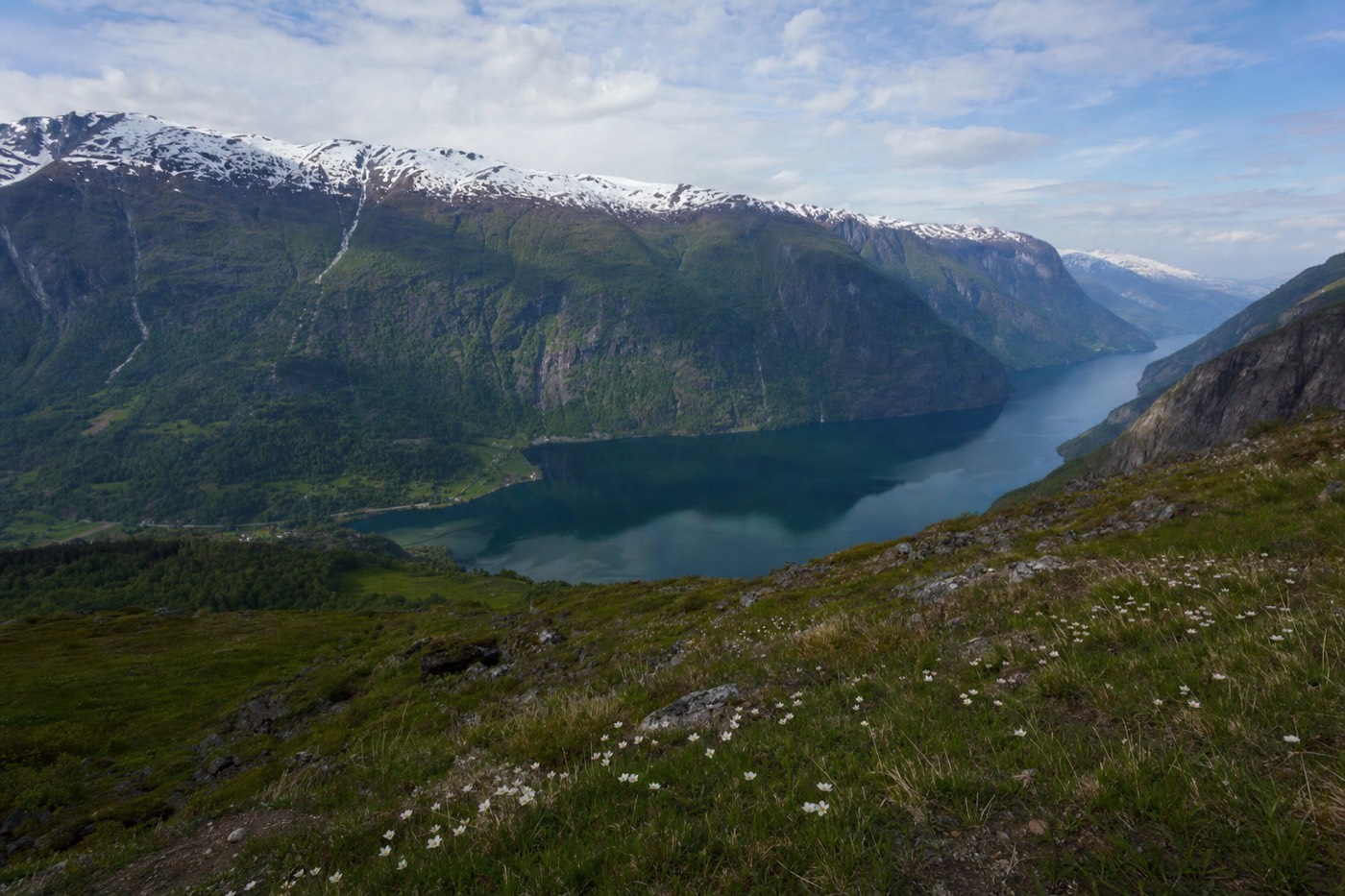
So what actually differs between them?
Access and landscape: Tromsø has a larger airport with more direct international connections, making it the easier, faster arrival point for a dedicated short aurora trip, while Lofoten's more dramatic peaks-straight-from-the-sea landscape gives aurora photography a distinctive foreground that Tromsø's setting does not match. Tromsø is also more built up as a specific "northern lights" tourism hub, with a correspondingly wider range of dedicated aurora tour operators to choose from.
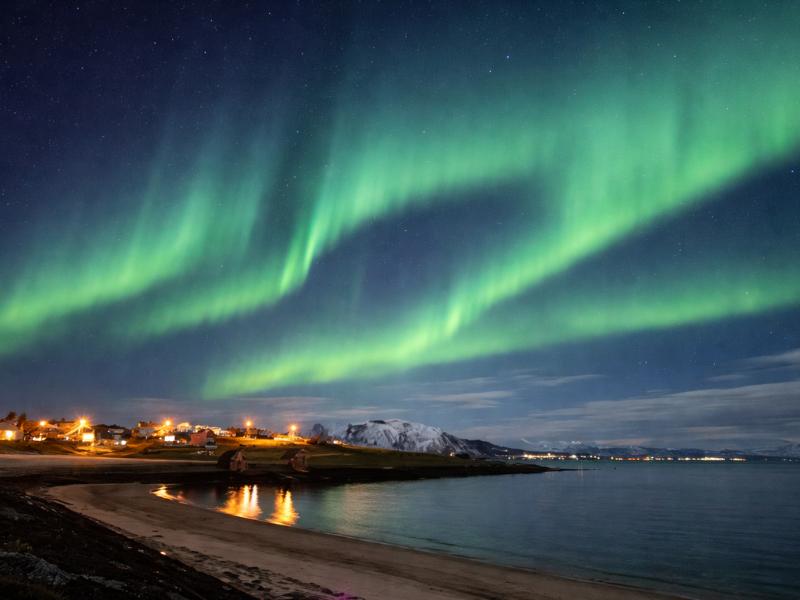
Which is easier to reach?
Tromsø generally wins on raw access, with more direct flight options from European hubs; reaching Lofoten typically means an extra domestic connection through Bodø, adding time to a short trip. See the full guide to getting to Lofoten for exactly what that connection looks like.
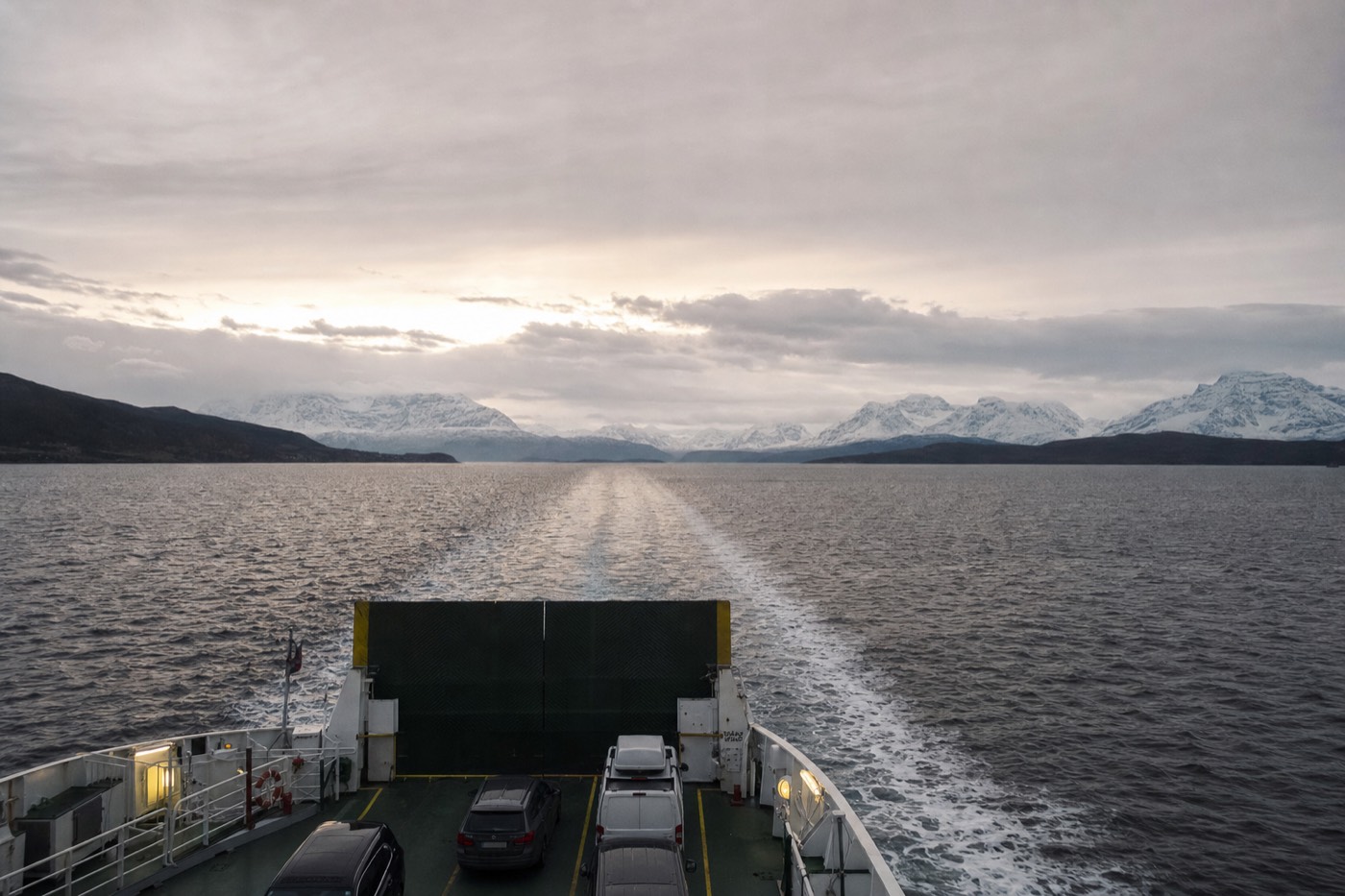
Which has better scenery for the daytime hours in between?
Lofoten's jagged peaks rising directly from the fjords, its beaches and the Reinebringen hike give a dedicated daytime itinerary that stands entirely on its own, not just a waiting room between aurora attempts. A Lofoten aurora trip doubles as a landscape and hiking trip in a way that is harder to replicate elsewhere at the same latitude.
| Lofoten | Tromsø | |
|---|---|---|
| Aurora odds (latitude/oval position) | Comparable | Comparable |
| Flight access | Domestic connection via Bodø usually required | More direct international routes |
| Daytime landscape | Dramatic peaks, fjords, beaches, Reinebringen hike | More urban, fjord setting, less dramatic peaks directly at the coast |
| Aurora tour options | Fewer, but real and well-reviewed | Larger, more established aurora-tourism industry |
So which should you actually pick?
Pick Tromsø for the fastest, simplest single-purpose aurora trip with the most tour choice; pick Lofoten if you want the northern lights as part of a broader trip built around dramatic hiking and coastal scenery rather than aurora-hunting alone. Some visitors on longer trips genuinely do both, using Tromsø as an easy arrival point and continuing on to Lofoten for the landscape.
Whichever you choose, the fundamentals are the same: darkness, clear sky and solar activity all have to align. The Lofoten aurora guide covers exactly which months and viewing spots give you the best odds once you have picked your base.