Best Time to Visit the Lofoten Islands
The best month to visit Lofoten is whichever one matches what you actually want to do: June and July for the midnight sun and hiking, February and March for stable snow and the northern lights, September for a genuine shoulder-season balance of both. There is no single right answer, only the right one for your trip.
Booking choice: Paddle the Eggum coast in the late evening, with a guide, island stops and refreshments. Discover Midnight sun kayak from Eggum
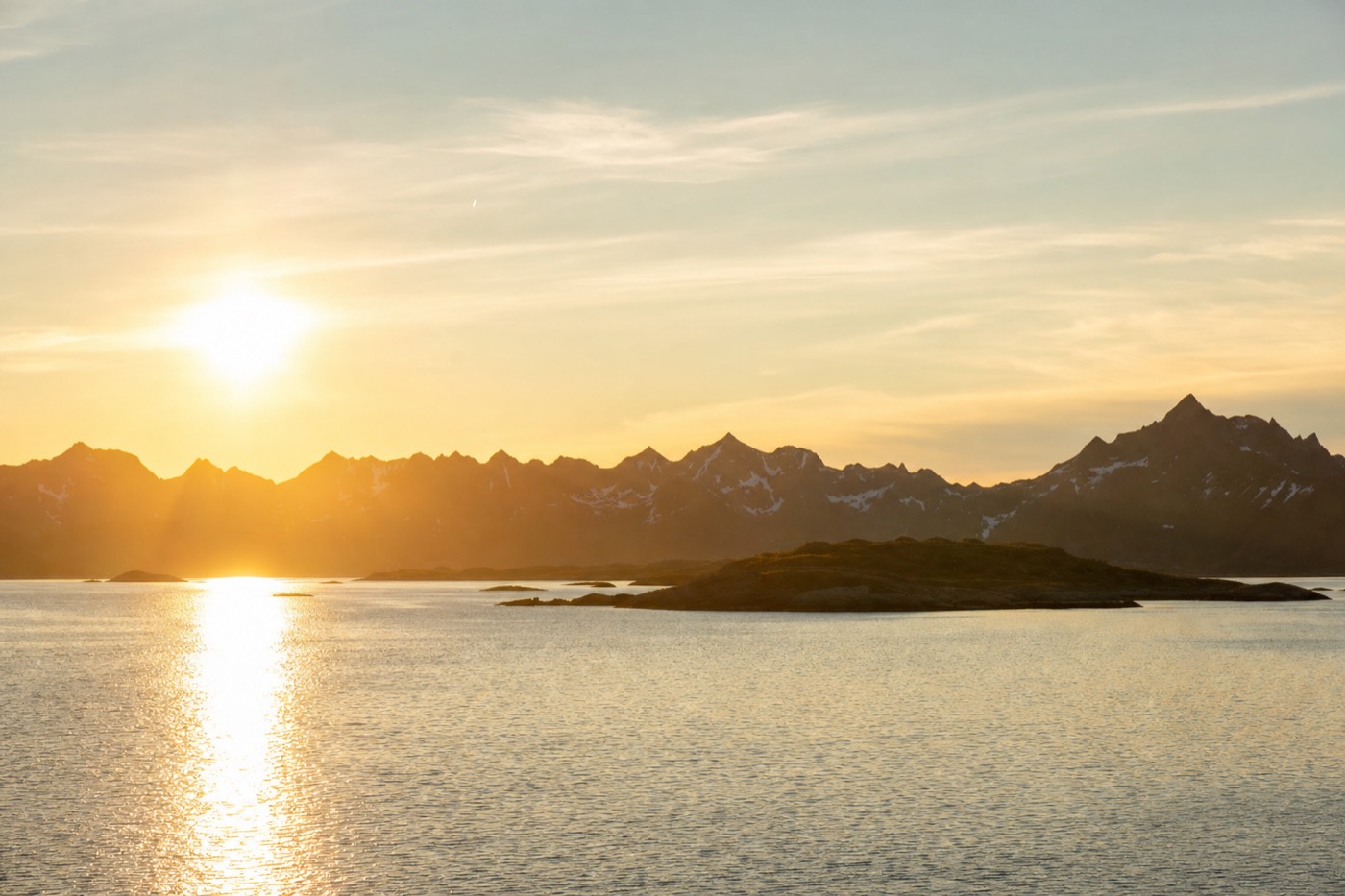
Every "best time to visit" question about Lofoten collapses into the same underlying fact: the archipelago runs two entirely different seasons at 68 degrees North, permanent daylight in high summer and real darkness from autumn through spring, and almost everything else on this page follows from which of those two worlds you want.
What each season actually gives you
A planning framework, not a guarantee: weather at 68 degrees North is genuinely changeable in any month.
For a guided option: Discover Midnight sun kayak from Eggum
So what actually is the best month?
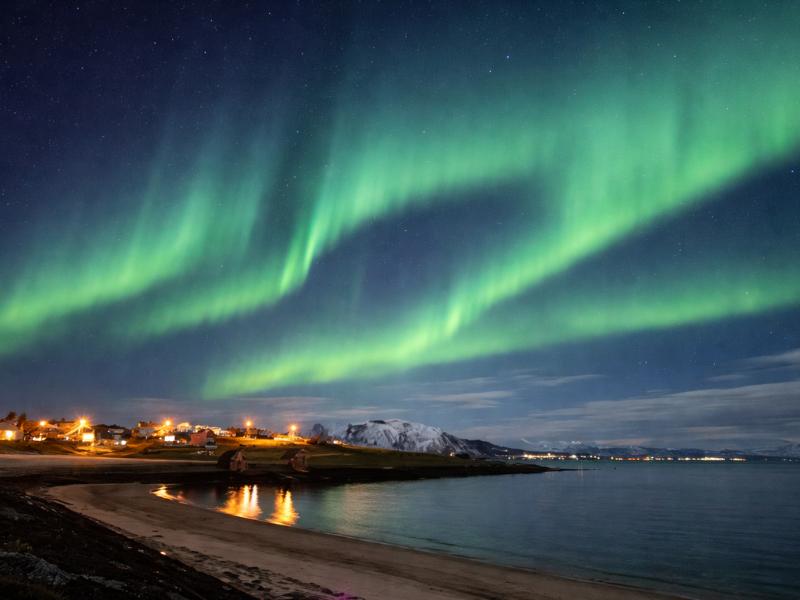
For most first-time visitors chasing the classic Lofoten photo, the fjords, the beaches, the hiking, June through August delivers the mildest weather and round-the-clock light; for northern lights and a quieter, more dramatic winter landscape, February and March give the best balance of stable snow and returning daylight. September earns a specific mention as the genuine crossover month: it keeps enough daylight to hike comfortably while bringing back real darkness at night for a first shot at the aurora, and it does both with noticeably fewer visitors than July.
Month-by-month scorecard
| Month | Daylight | Typical weather | Crowds | Best for |
|---|---|---|---|---|
| January | Very short, polar night fading late in the month | Cold, often snowy | Low | Winter landscapes, snowshoeing, aurora |
| February | Lengthening fast | Stable snow, clearer spells | Low-medium | Aurora, winter photography |
| March | Long enough to explore comfortably | Milder than Jan, snow still solid | Medium | The best all-round balance |
| April | Growing toward near-constant light | Milder, lingering snow up high | Medium | Late aurora, shoulder pricing |
| May | Approaching midnight sun | Mild, drier | Growing | Hiking without peak crowds |
| June | Midnight sun | Mild, generally the driest stretch | Peak begins | Kayaking, beaches, full Reinebringen access |
| July | Midnight sun | Warmest month | Peak | All outdoor activities, book well ahead |
| August | Days shortening, still very long | Warm, occasional rain | Peak into mid-month | Late-summer hiking and boat tours |
| September | Real darkness returns | Cooling, more changeable | Dropping fast | The crossover month: hiking by day, first aurora chances by night |
| October | Long nights | Wetter, windier | Low | Aurora and autumn colour |
| November | Long nights | Wet, changeable | Very low | Budget travel, quiet roads |
| December | Polar night near the solstice | Cold, short usable daylight | Low, rising around the holidays | Maximum darkness, aurora |
What is the midnight sun actually like to plan around?
From roughly late May to mid-July the sun never fully sets in Lofoten, which sounds novel until you are trying to sleep at 1am in full daylight; pack an eye mask and treat "evening" as just another block of usable daylight for hiking, kayaking or a late boat tour. This is also the single easiest window to plan around weather-wise, since summer brings Lofoten's mildest, driest conditions of the year.
What does winter actually take away, and what does it give back?
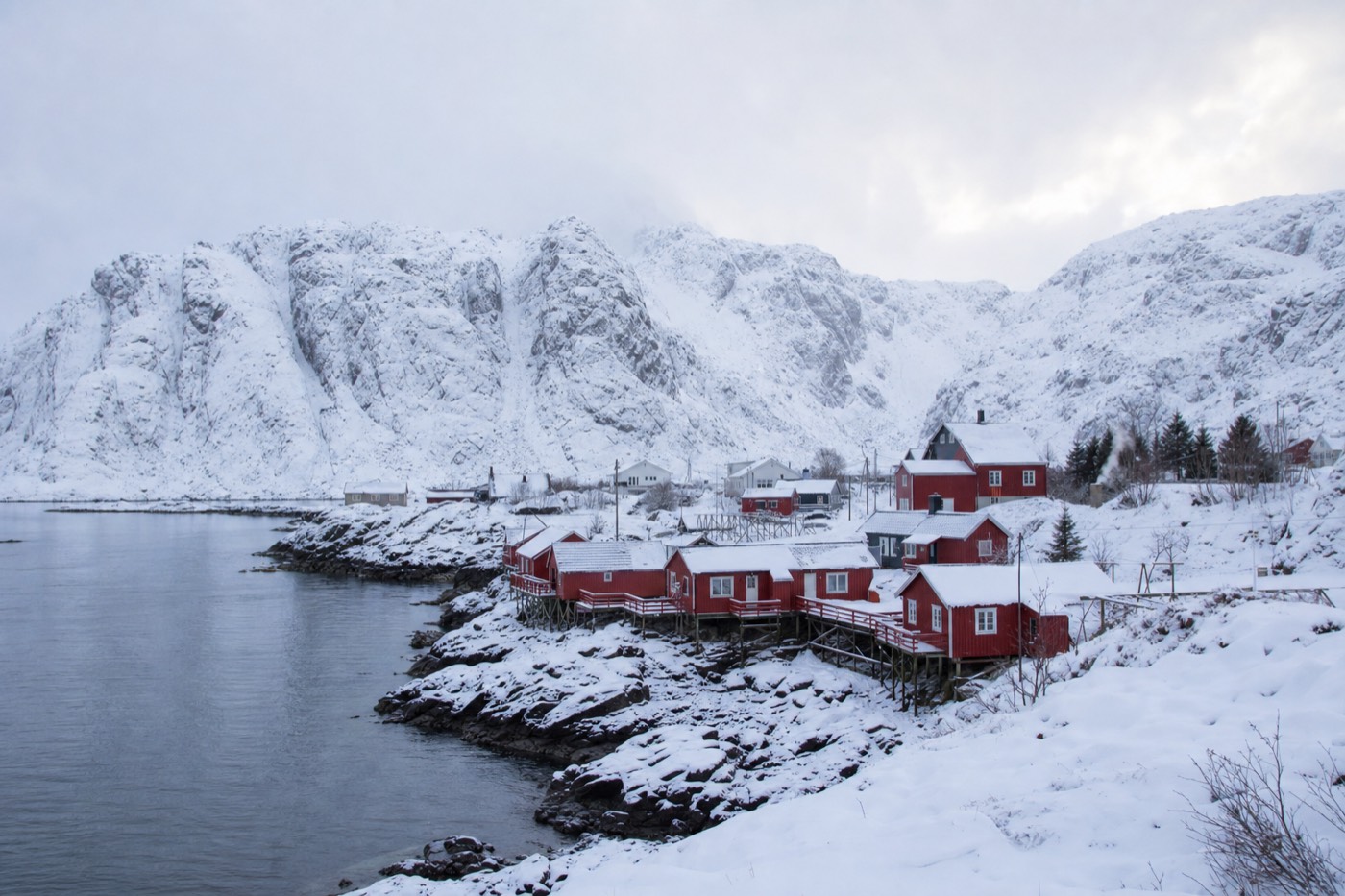
Winter trades daylight hours for the northern lights, quieter roads, and a genuinely different, starker landscape; the Reinebringen stone staircase becomes unsafe to climb, but guided snowshoe routes open up terrain built for the season instead. Deep winter (December, early January) is the extreme version of this trade: shortest days, but also the fewest other visitors and the starkest scenery.
Which season is cheapest?
Shoulder seasons, roughly April to late May and September to October, tend to bring lower accommodation rates than the July peak while still offering workable weather for hiking and sightseeing. Deep winter (November through February, outside the holiday weeks) can price even lower still, though at the cost of the shortest daylight windows for anything outdoors.
Does the weather actually differ that much month to month?
Yes, though "changeable" is the more useful word than any single forecast: coastal weather at this latitude shifts fast regardless of season, so even the mildest summer week can bring a rainy day, and even deep winter regularly produces a clear, calm afternoon. Layering for the day rather than trusting a single forecast is standard local advice in any month.
How does this map onto what you actually want to do?
| If your priority is... | Aim for |
|---|---|
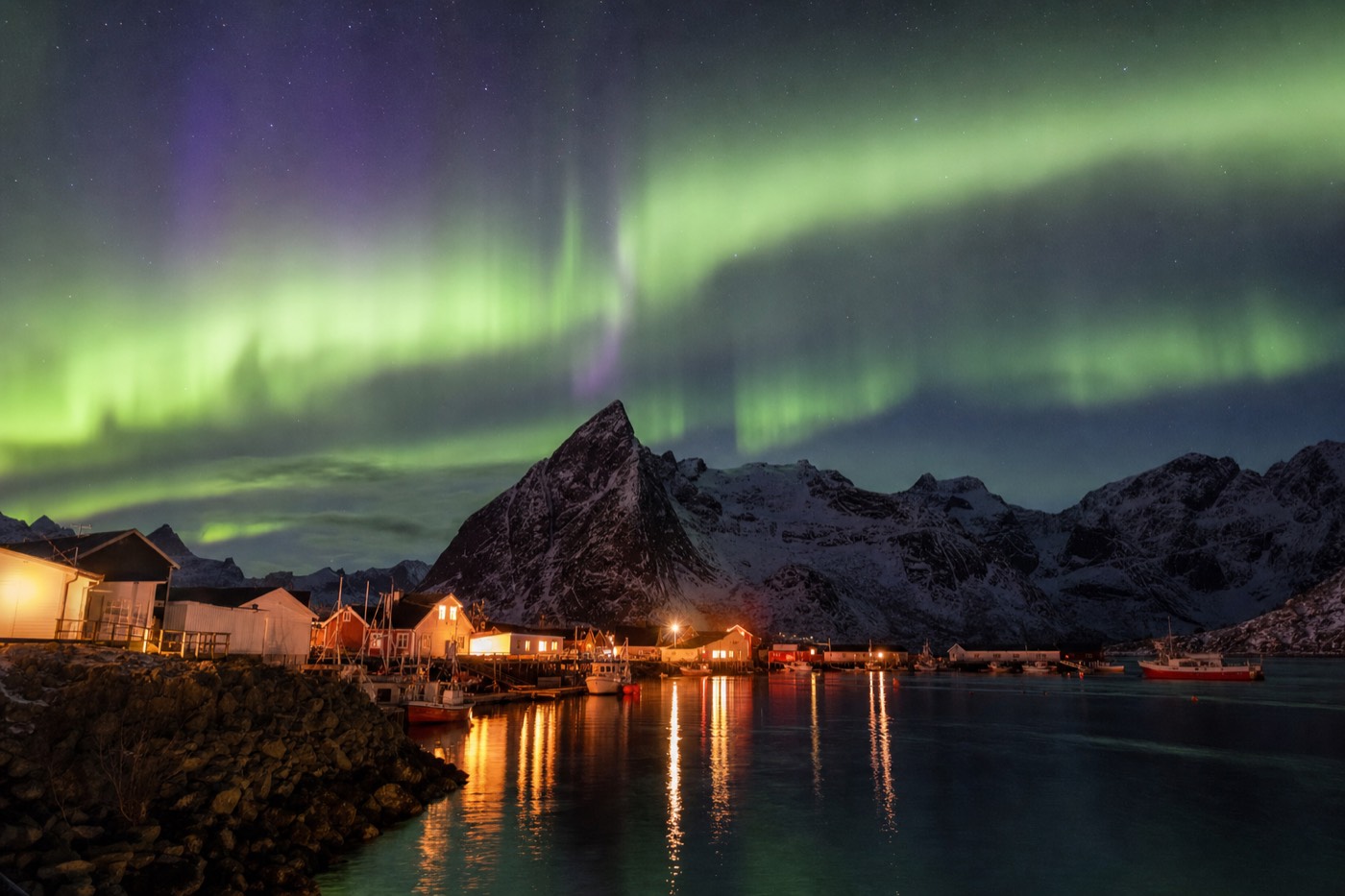
| Northern lights | Late September to late March, with February-March the strongest single window; see the dedicated aurora guide |
| Hiking Reinebringen safely | May through September, when the stone steps are dry |
| Kayaking and beaches | June through August for the mildest water and longest days |
| Fewer other travellers | September-October or April-May |
| Lowest prices | Shoulder months, or deep winter outside the holidays |
| A balance of hiking and aurora in one trip | September, the genuine crossover month |
What temperatures should you actually pack for?
Lofoten's coastal position keeps it milder than its Arctic latitude suggests, but "milder" still means layering matters in every season: summer days sit comfortably cool rather than hot, and winter, while cold, rarely reaches the extremes of inland Scandinavia thanks to the same ocean influence. Wind chill matters more than the thermometer reading in almost every month, since the archipelago sits fully exposed to the open sea.
| Season | General feel | Pack for |
|---|---|---|
| Winter (Dec-Feb) | Cold, coastal rather than continental extreme | Insulated waterproof layers, proper winter boots, warm hat and gloves |
| Spring (Mar-May) | Cool, increasingly mild toward May | A warm mid-layer plus a windproof shell, snow gear early in the window |
| Summer (Jun-Aug) | Cool to mild, rarely hot | A fleece or light insulated layer even in July; the wind off the sea bites |
| Autumn (Sep-Nov) | Cooling fast, increasingly wet | A genuinely waterproof outer layer, not just water-resistant |
What can you only do in specific months?
A handful of Lofoten's signature experiences are hard-locked to a season regardless of how you plan around it: the midnight sun only exists from roughly late May to mid-July, the northern lights are physically invisible during that same window because the sky never gets dark, and the Reinebringen stone staircase is genuinely unsafe outside the May-to-September dry season.
| Experience | Only possible | Why |
|---|---|---|
| Midnight sun | Late May-mid July | The sun does not set below the horizon at this latitude in that window |
| Northern lights | Late Aug/Sept-mid April | Requires real darkness, absent during the midnight sun period |
| Reinebringen stone-step hike (as a summer trail) | Roughly May-September | Steps become unsafe when wet, snowy or icy |
| Guided snowshoe routes | Roughly November-April | Requires reliable snow cover |
| Comfortable open-water kayaking and snorkeling | Roughly May-September | Water and air temperatures are most manageable in this window |
What do repeat visitors say is the most underrated month?
March comes up repeatedly as the pick locals and repeat visitors quietly favour over the more obvious summer or deep-winter choices, since it combines stable, still-deep snow with rapidly lengthening days, giving both good aurora odds after dark and genuinely usable daylight to explore in. It also sits well before the summer price and crowd peak, while avoiding the shortest, coldest stretch of the polar night.
Which months should a first-time visitor think twice about?
Not any month outright, but two deserve a clear-eyed look before booking: early January, when daylight is at its shortest and road conditions can be at their most demanding, and late July, when accommodation books out furthest ahead and the handful of famous spots see their heaviest crowds of the year. Neither is a bad time to visit; both simply reward extra planning, whether that means booking accommodation months ahead for July or building in flexible days around shorter daylight in January.
What exactly happens during the midnight sun and polar night?
In Svolvær, the midnight sun runs from around 25 May to 18 July, when the sun stays above the horizon for the full 24 hours; the polar night runs from around 7 December to 5 January, when the sun never rises above the horizon at all, though a soft blue-hour twilight still lights the middle of the day rather than full darkness. Exact dates shift slightly across the archipelago depending on latitude and local terrain, per Visit Lofoten's own midnight sun guide, but these are the commonly cited dates for the region's main town.
| Phenomenon | Approximate dates (Svolvær) | What it means practically |
|---|---|---|
| Midnight sun | ~25 May - 18 July | 24-hour daylight; "evening" activities run on the same light as midday |
| Polar night | ~7 December - 5 January | The sun does not rise, but a blue-hour twilight still brightens midday rather than true darkness |
| Shoulder daylight (rest of the year) | All other months | Normal sunrise/sunset, with day length changing quickly near the equinoxes |
How does Lofoten's climate compare to the rest of northern Norway?
Milder than the latitude suggests, and milder than inland or more easterly parts of northern Norway, because the archipelago sits directly in the path of the warming North Atlantic Current, which keeps winter temperatures well above what the same latitude produces further from the coast. The trade-off is more wind and more changeable weather generally, since that same ocean exposure brings fast-moving weather systems through with little inland terrain to slow them down.
Does accommodation availability change much through the year?
Substantially: July and the first half of August book out furthest ahead, particularly rorbuer with water views around Reine, while the shoulder months and deep winter (outside the Christmas and New Year weeks) carry both better availability and lower nightly rates. Booking three to six months ahead is realistic advice for a July or August trip on a specific budget or property; the same trip planned for October or March can often be booked with a few weeks' notice.
| Booking window | Best time to book |
|---|---|
| July-mid August | 3-6 months ahead for the best selection |
| Shoulder months (May, September, October) | 4-8 weeks ahead is usually enough |
| Deep winter (outside holidays) | Often bookable a few weeks out |
| Christmas / New Year | Book as early as the July peak; a genuinely popular window despite the short daylight |
Should you combine a Lofoten trip with the rest of Norway?
Many visitors do, most commonly pairing Lofoten with a Bergen or Oslo stopover, or with Tromsø further north; the trade-off is time, since each additional region adds its own travel days on top of what Lofoten itself deserves. A common mistake is squeezing Lofoten down to two rushed days to fit more of the mainland into the same trip; if the archipelago is a genuine priority rather than an add-on, it is worth protecting its own five-plus days rather than treating it as one stop among many.
A two-week Norway trip that includes Lofoten typically looks something like a few days in Oslo or Bergen, a flight or scenic rail leg north, then the archipelago itself for the back half of the trip. Trying to compress Lofoten into a single overnight stop on a broader Scandinavia tour tends to produce the most common complaint in this guide's opening section: travellers who saw the postcard views from a moving car but never had the daylight or the weather window to actually hike Reinebringen or wait out a cloudy night for the aurora.
The reverse mistake is just as common: allocating so much of a trip to Lofoten that Oslo or Bergen become a rushed single night either side of it. Neither approach serves the traveller well. Treating Lofoten as a genuine, standalone leg of a Norway itinerary, with its own arrival and departure days rather than a squeezed side trip, is the pattern that consistently produces the trips people describe as worth repeating.
However the calendar shakes out, the underlying advice on this page reduces to one habit: pick the season that matches what you actually want to do first, then build the rest of the trip, the length, the base town, the activities, around that choice rather than the other way round.
Once you have a season picked, the next real question is how many days that season actually needs to feel worthwhile rather than rushed; the itinerary guide breaks that down by trip length.