Midnight Sun in Lofoten: When to See It and Where to Go
The short answer: the midnight sun runs from roughly the last week of May to the middle of July across Lofoten, with exact dates shifting a little by location, and for around two months the sun simply does not set. The catch few guides mention: Svolvær itself, the archipelago's biggest town, sits behind mountains that can block the low midnight sun even inside that window.
Booking choice: Paddle the Eggum coast in the late evening, with a guide, island stops and refreshments. Discover Midnight sun kayak from Eggum
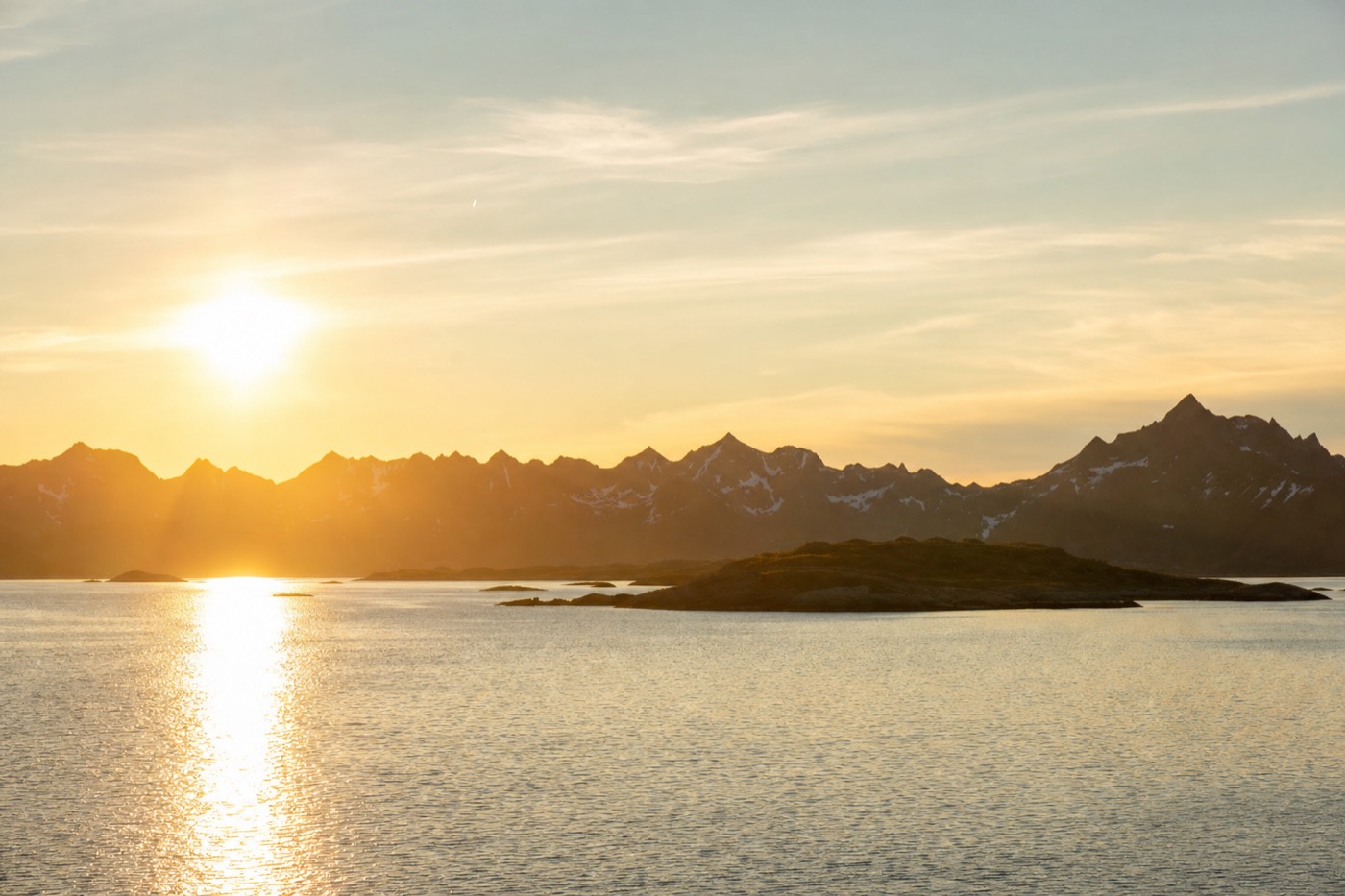
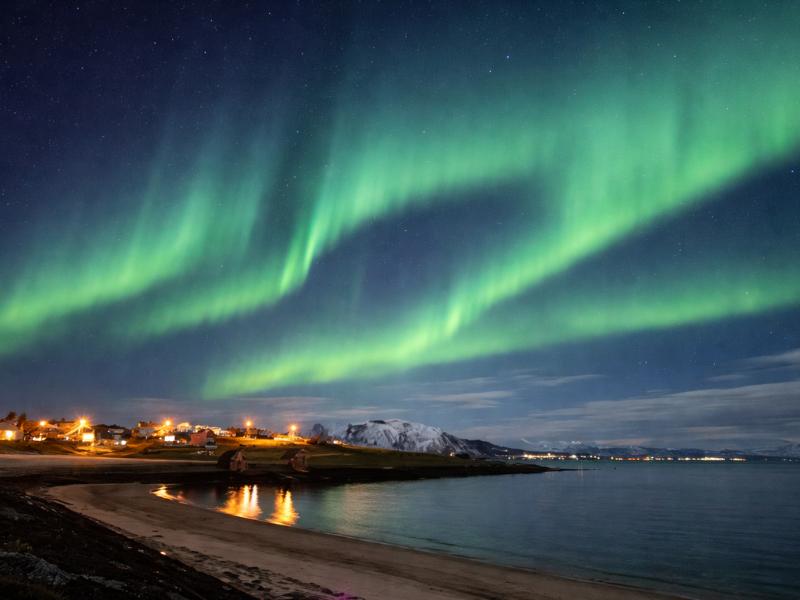
Northern lights get the marketing push because Lofoten's winter darkness is dramatic and photogenic in an obvious way. The midnight sun is the quieter opposite season, less discussed on its own, and genuinely disorienting the first time you experience it: a full night with the sun still visible above the horizon.
The midnight sun window, by location
Dates vary slightly by exact latitude and local horizon within the archipelago; treat these as planning ranges, per Visit Lofoten's own midnight sun guide.
For a guided option: Discover Midnight sun kayak from Eggum
What is the midnight sun, and when does it actually happen here?
The midnight sun is the period when the sun stays above the horizon for a full 24 hours, caused by Lofoten's position well north of the Arctic Circle; across the archipelago this runs roughly from the last week of May to the middle of July, though the exact start and end dates shift by a few days depending on the precise location and local horizon. Different sources and different spots within Lofoten quote slightly different windows, commonly cited ranges run from around 25-28 May through to 14-18 July, which is close enough to treat as a single seven-week season for planning purposes.
Why does Svolvær itself sometimes disappoint?
Svolvær sits south of a range of high mountains that physically block the low midnight sun from view even during the correct calendar window, so travellers who base themselves in the town centre and expect an unobstructed sun at midnight can be caught out; reaching the outer coast, spots like Laukvika or Hov, both roughly 20 to 30 minutes away by car, clears the peaks and delivers the real effect. This is one of the more useful, under-reported facts about the phenomenon: being technically inside the midnight sun season is not the same as being able to see it from wherever you happen to be standing.
| Location | Midnight sun visibility | Why |
|---|---|---|
| Svolvær town centre | Often blocked | High mountains directly to the north obstruct the low sun |
| Laukvika / Hov (outer coast, ~20-30 min from Svolvær) | Clear, unobstructed | Open sea horizon to the north with nothing in the way |
| Uttakleiv and the west-coast beaches | Clear | Open Atlantic-facing horizon |
| Reine and the southern villages | Generally clear, check local terrain | Position and surrounding peaks vary by exact spot |
What does living with 24-hour daylight actually feel like?
Genuinely disorienting for most first-time visitors: the absence of a real sunset removes the usual cue that tells your body it is time to slow down, so many travellers find themselves staying active well past their normal bedtime simply because the light gives no signal to stop, then struggling to actually fall asleep once they do go to bed. An eye mask or blackout curtains, which many Lofoten accommodations now provide as standard given how common this exact complaint is, make a real difference.
| Adjustment | Why it helps |
|---|---|
| Pack or request an eye mask | Removes the light cue that keeps you awake past a normal bedtime |
| Set an actual bedtime alarm, not just a wake alarm | Without darkness, "I'll go to bed when I'm tired" often means far too late |
| Plan at least one deliberately late activity | A midnight kayak or a late drive under full daylight is a genuinely memorable, low-effort experience unique to this season |
| Build in a rest day | The temptation to keep doing things around the clock catches up with most visitors by day three or four |
What can you actually do at "midnight" during this season?
Almost anything you would do at 2pm: kayaking, hiking and driving are all genuinely viable activities at what the clock calls midnight, since the light is functionally the same as a normal evening, just with a lower, warmer sun angle that many photographers and paddlers specifically seek out. The Midnight Sun Kayak Northern Explorer Tour is built entirely around this: a guided paddle timed for the low, golden late-night light rather than the flatter light of a conventional daytime tour.
| Activity | Why midnight works differently here |
|---|---|
| Kayaking | Calm water and warm, low-angle light without the daytime wind that often picks up by afternoon |
| A scenic drive | Empty roads and long shadows across the peaks, a genuinely different look from the same route at midday |
| A late hike | Cooler temperatures than a midday summer climb, with light that lasts for hours rather than fading |
| Photography | The "golden hour" effectively extends across several hours rather than the usual 20-30 minutes |
How is this different from the northern lights season?
They are direct opposites on the calendar and cannot overlap: the midnight sun runs through the brightest weeks of summer when true darkness never falls, while the aurora needs real darkness and only becomes visible again from around late August through April, so no single trip can see both unless it is planned around one or the other specifically. Full detail on the opposite season sits in this site's northern lights guide.
What's the best photography approach for midnight sun light?
Treat the entire late evening as one extended golden hour rather than chasing a single "sunset" moment that will not arrive: because the sun stays low on the horizon for hours rather than dropping below it, the same warm, long-shadow light that normally lasts twenty minutes at dusk can be worked with for two or three hours straight, which is a genuinely different shooting rhythm from most destinations.
| Setting | Note for midnight sun |
|---|---|
| White balance | Warm, golden tones dominate for hours; auto white balance can flatten this, so consider a manual warm setting |
| Shooting window | Roughly 10pm to 2am gives the lowest, warmest light, not a single fixed "golden hour" |
| Subject choice | Reflective water (fjords, calm bays) doubles the effect of the low sun |
| Long exposures | The stable, low light supports longer exposures than midday without the usual overexposure risk |
Does the constant daylight affect wildlife and fishing activity too?
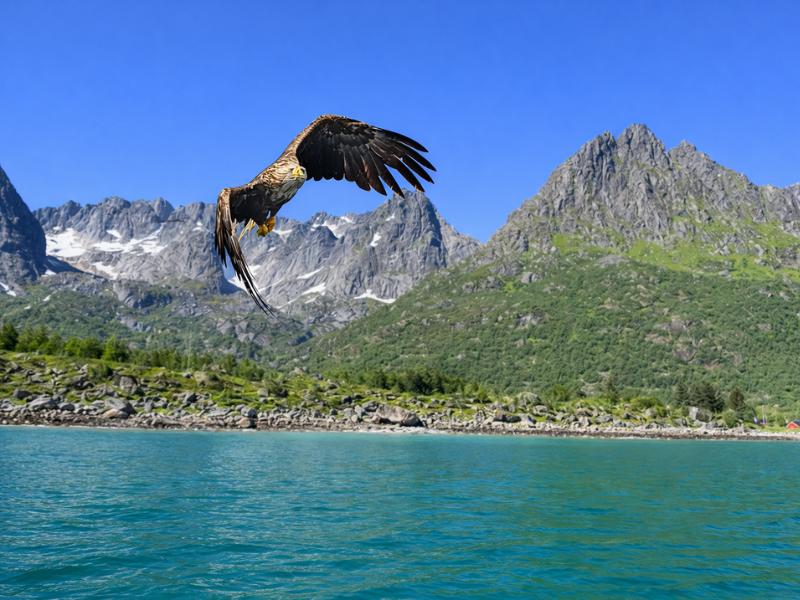
Yes: the same 24-hour light that extends tour hours for visitors also extends the active window for wildlife and, further out, the boats working Lofoten's waters, so sightings of sea eagles, seabirds and marine life around a Trollfjord cruise or a fishing trip are not confined to a narrow daytime window the way they would be at lower latitudes. This is one of the quieter, practical benefits of a summer visit specifically: a late-evening boat trip has effectively the same wildlife-viewing conditions as a midday one, which is not true in most other destinations at any time of year.
How should you actually pack for a trip built around 24-hour daylight?
| Item | Why it matters for this specific season |
|---|---|
| An eye mask, packed rather than assumed | Not every accommodation provides one, and it is the single most effective fix for midnight-sun sleep disruption |
| Layers rather than heavy insulation | Summer temperatures are mild but coastal wind and evening cooling are still real, even at "midnight" |
| Sunglasses | Low-angle sun for extended periods is genuinely more glare-inducing over a long evening than a normal sunset |
| A flexible daily schedule rather than a fixed one | The best light and the calmest conditions for photography or paddling often fall late in the evening, not during a conventional daytime slot |
What mistakes do first-time visitors make around the midnight sun?
| Mistake | Fix |
|---|---|
| Assuming any spot in Lofoten shows the midnight sun equally well | Check terrain; Svolvær specifically often needs a short drive to the outer coast |
| Staying up every night simply because the light allows it | Set an actual bedtime and use an eye mask; the light gives no natural cue to stop |
| Confusing "midnight sun season" with "aurora season" | They are opposite, non-overlapping windows on the calendar |
| Booking accommodation without checking for blackout curtains | Ask directly if sleep quality matters to your trip; not every property has them |
Does Norway mark the midnight sun with any local traditions?
Sankthansaften, Saint John's Eve on 23 June, is Norway's traditional midsummer bonfire celebration, and in a region already inside the midnight sun window it takes on extra character: bonfires lit along the coast under a sky that never actually darkens, a genuinely different atmosphere from the same tradition further south where night eventually falls. Visitors travelling in late June may encounter local bonfires and gatherings tied to this tradition, though as with any local event, timing and specific locations vary and are worth checking locally rather than assuming a fixed, publicised schedule.
Does the midnight sun affect tour timing and availability?
Yes, in a genuinely useful way: because there is no darkness to work around, operators can and do run activities at hours that would be impossible in winter, which is exactly why a "midnight" kayak tour exists as a real, bookable product rather than a marketing gimmick. This also means summer tour schedules are generally more flexible around start times than winter ones, which are constrained by the much shorter usable daylight window.
How does the midnight sun window change from its start to its end?
The edges of the season, late May and mid-July, give a lower, more angled sun that dips close to the horizon without fully setting, while the core weeks in between hold the sun highest and brightest through the night; visitors chasing the most dramatic, low-angle "midnight" light specifically often prefer the edges of the window over its brightest middle. This is a genuinely useful planning distinction: "midnight sun season" is not one uniform experience from end to end, and travellers with flexible dates can choose which version they want. Neither edge is a lesser version of the phenomenon; the core weeks simply trade the low, angled light of the shoulders for the reassurance of a wider, more reliable window in case a specific date does not line up with clear weather. However the calendar lines up, the underlying fact stays constant across the whole window: for close to two months, this stretch of Arctic Norway simply does not experience night, and no amount of reading about it fully prepares a first-time visitor for what that actually feels like. Plan around it deliberately rather than fighting it, and it becomes one of the more memorable aspects of the whole trip, not just a logistical quirk to route around. Most repeat visitors, once they have adjusted, describe the constant light as one of the specific things that pulled them back for a second summer trip.
The midnight sun rewards a slightly different mindset than most trips: let go of a fixed daily schedule and treat any hour as a viable hour to be outside. For where to actually stand for the clearest view, and for the kayak tour built specifically around this light, see the sections above; for the opposite, dark-season experience, the northern lights guide covers the same archipelago in reverse. Whichever season draws you here, Lofoten's basic character, mountains rising straight from the sea, small fishing villages, a landscape that photographs as dramatically as it feels in person, holds true year-round; it is only the light around it that swings from one extreme to the other. Deciding which version of Lofoten to see, the one that never sleeps or the one lit by the aurora, is less about which is objectively better and more about which experience you actually want to carry home.