Hamnøy Village Guide: The View, the Bridge and What Else Is There
The short answer: Hamnøy is a cluster of a few dozen red rorbu cabins on a bridge-connected islet three kilometres north of Reine, and the view from that bridge, cabins in the foreground, Olstinden rising sharp behind them, is the single most reproduced photograph in Lofoten. Here is what the village actually is beyond that one shot.
Booking choice: Visit southern fishing villages and Skagsanden with a driver and photography stops. Discover Reine, Hamnøy and Å photo tour
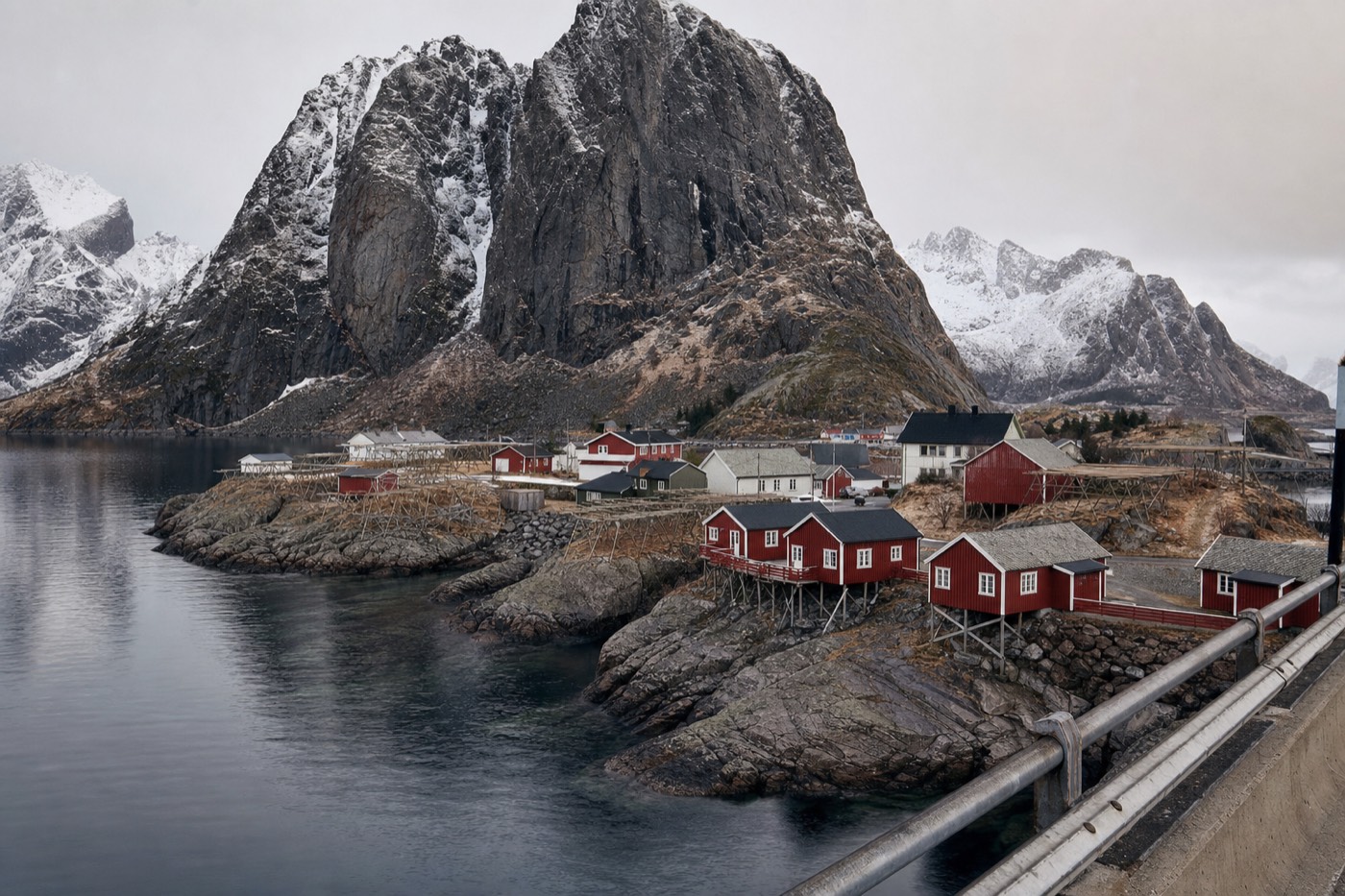
Every Lofoten slideshow has the same photograph in it somewhere: a handful of red cabins on stilts, a sharp granite peak rising directly behind them, still water in front. That photograph is Hamnøy, and it earns a guide of its own because almost nobody stops to learn anything about the place beyond the fifteen minutes they spend on the bridge taking the shot.
Hamnøy at a glance
Figures from Visit Lofoten's Hamnøy destination page and the village's own recorded history.
For a guided option: Discover Reine, Hamnøy and Å photo tour
What is Hamnøy, and why does everyone photograph it?
Hamnøy is a small, still-working fishing hamlet on a cluster of islets just off Moskenesøya, connected to the road network by a bridge finished in 1981, and its fame comes from one specific vantage point: the bridge itself, which frames the village's red rorbu cabins against the near-vertical face of Olstinden, a 732-metre peak that rises almost straight out of the water behind them. Unlike a lot of "iconic viewpoint" locations that turn out to be a paved car park with a sign, Hamnøy is a genuine, small, lived-in village, not a purpose-built photo stop.
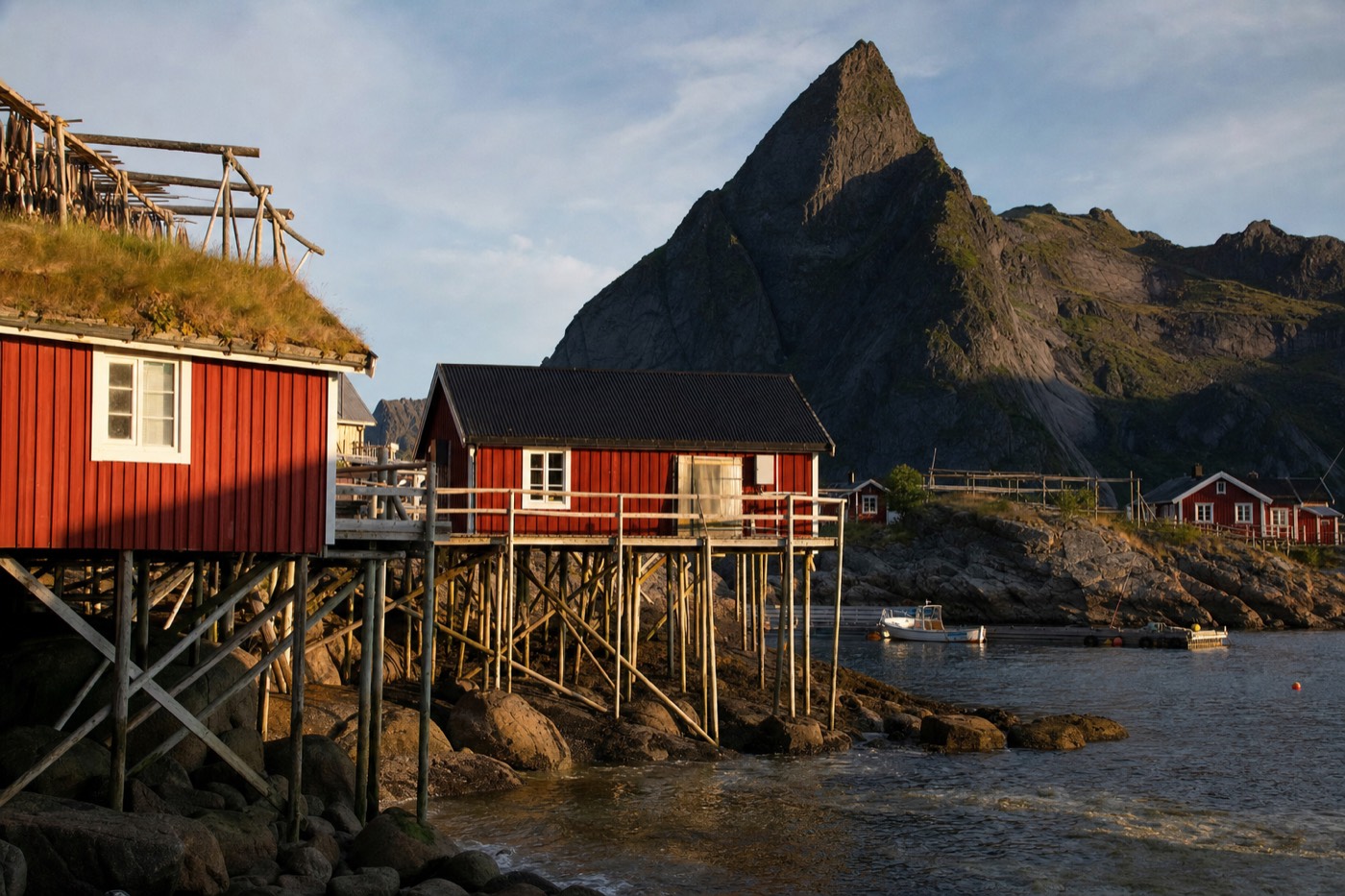
The village takes its modern shape from the Eliassen family, who settled here in the mid-19th century and built a livelihood on cod fishing and the stockfish trade, the same trade that built most of Lofoten's coastal economy. Their name survives today in Eliassen Rorbuer, a still-operating cluster of the traditional fishermen's cabins that gives the postcard shot its actual subject matter, real buildings people can rent, not stage-set replicas.
Where exactly is Hamnøy, and how do you get there?
Hamnøy sits on the E10 roughly three kilometres north of Reine, on Moskenesøya, the same island that carries Reinebringen and the Å village at the archipelago's southern tip, so almost every itinerary that includes Reine passes directly through or past Hamnøy without any detour required. If you are flying into Leknes and driving south, Hamnøy appears well before Reine itself, which catches out some first-time visitors who assume the famous view is IN Reine and drive straight past it.
| From | Distance to Hamnøy | Notes |
|---|---|---|
| Reine | ~3 km north on the E10 | A five-minute drive; walkable in about 40 minutes if you have the time |
| Leknes Airport | ~40 km south on the E10 | Roughly 45 minutes to an hour, depending on conditions |
| Svolvær | ~120 km south-west | Well over two hours; most visitors base in or near Reine rather than day-tripping from Svolvær |
What is the view from the bridge actually looking at?
The classic composition puts the red rorbu cabins in the foreground, the water of the strait in the middle distance, and Olstinden and its neighbouring peak Festhaeltinden filling the frame behind, the same combination of working fishing architecture and dramatic geology that recurs across Lofoten but rarely lines up this cleanly from a spot you can simply pull over and stand at. The bridge itself, a modest concrete span, is not scenic in its own right; its value is purely as the one angle where the cabins, water and peak compose correctly.
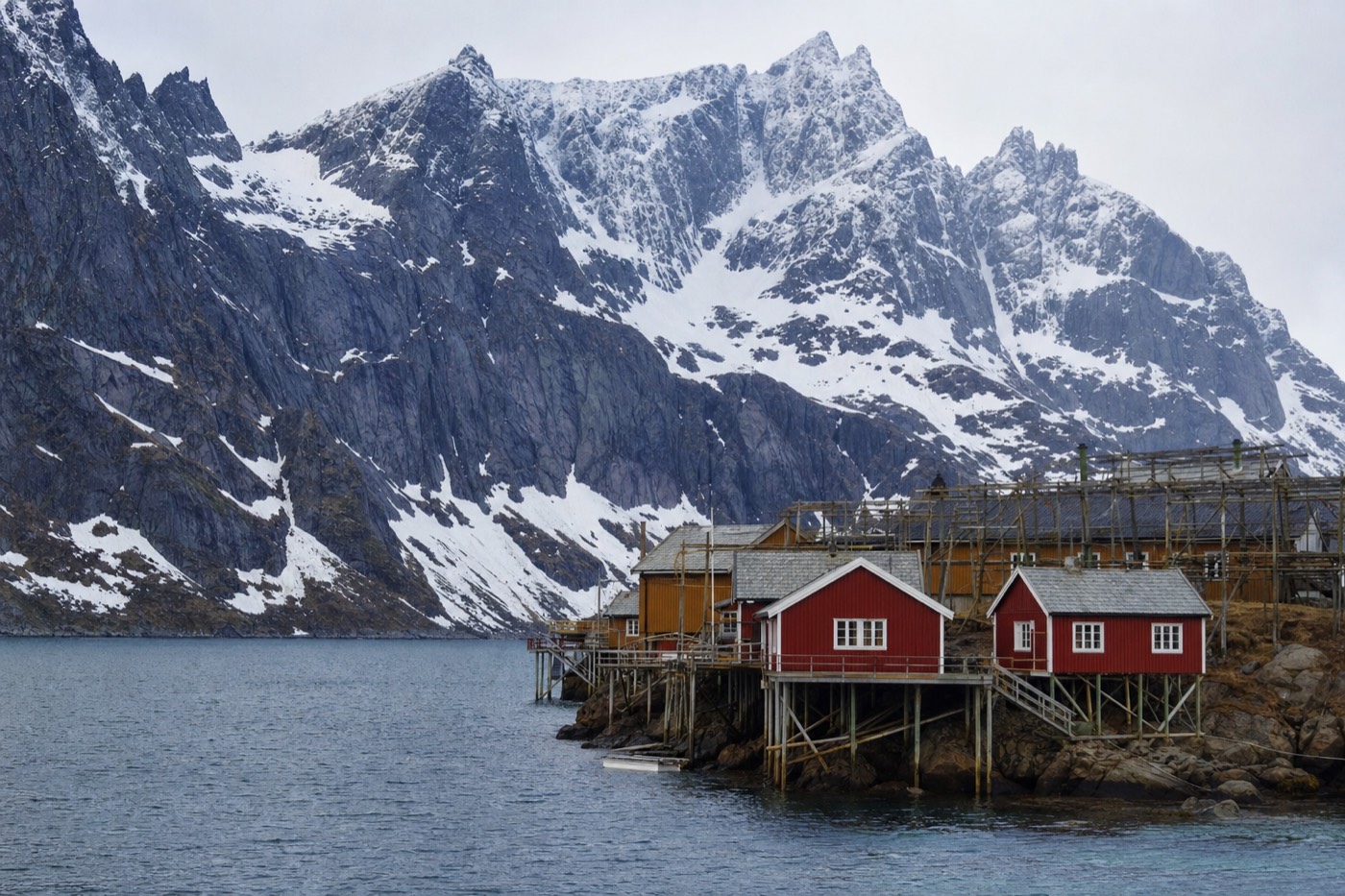
Photographers who want variation beyond the standard shot walk a short distance either side of the bridge pull-off, where the angle on the cabins and the mountain shifts slightly, or shoot from slightly further back with a longer lens to compress the peak against the rooftops.
When is the best time of day and year to photograph Hamnøy?
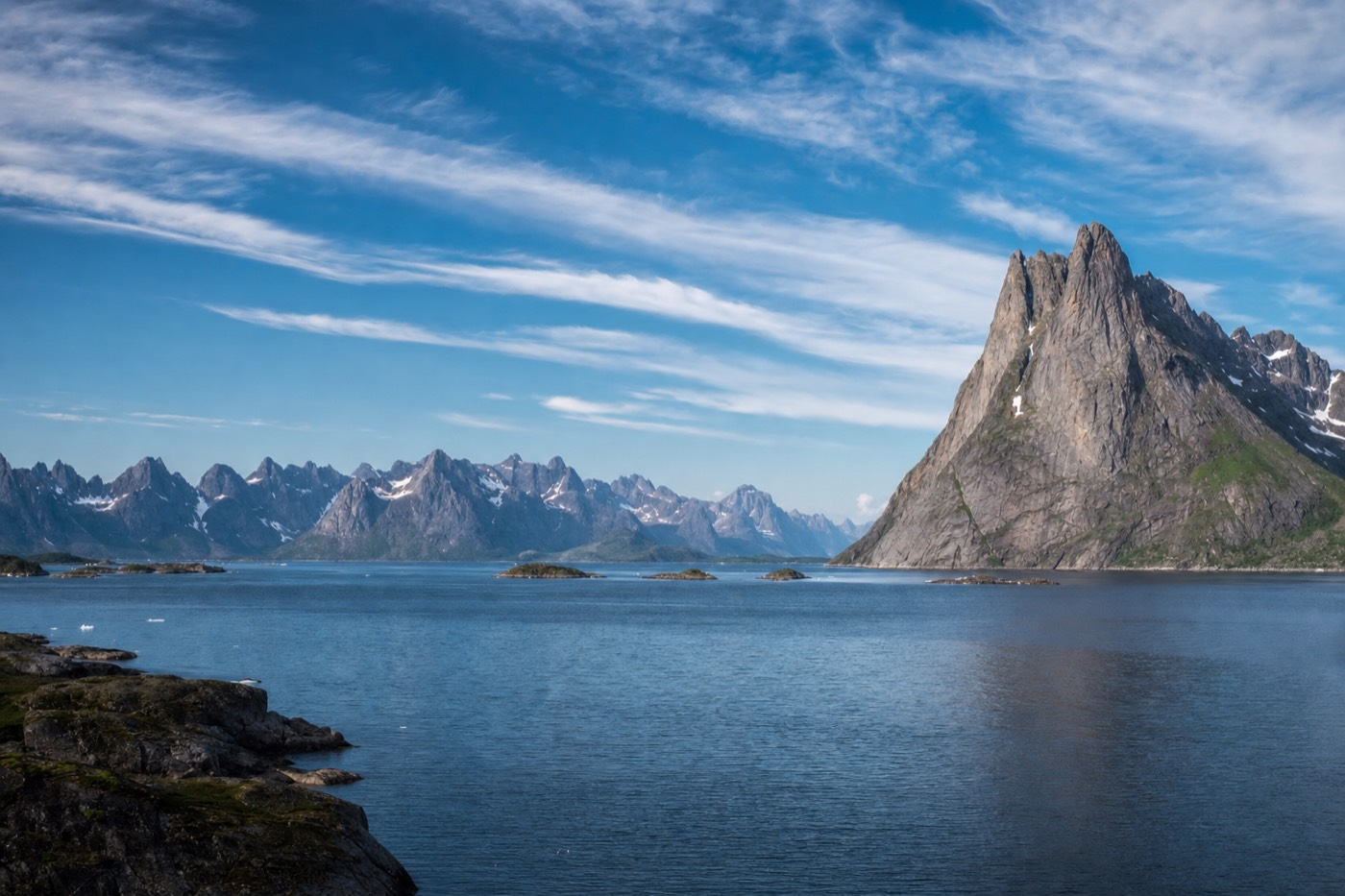
Early morning, roughly the hour around sunrise, gives the cleanest light and the emptiest bridge, since most visitors arrive mid-morning onward; in winter this coincides with the low, warm-toned light that never fully rises very high anyway, and in the midnight sun months a very late evening shot gets the same effect without an early alarm. Midday light in summer is flatter and the pull-off is at its most crowded, exactly the combination that produces the least distinctive version of the shot.
| Season | Light quality | Crowd level | What you get |
|---|---|---|---|
| Winter (Dec-Feb) | Low, warm, short window | Quiet outside midday | Snow on the peak, real chance of an aurora frame after dark |
| Spring (Mar-May) | Lengthening, often clear | Growing but manageable | Snow still on Olstinden, milder standing conditions |
| Summer (Jun-Aug) | Midnight sun, flat at midday | Busiest, tour buses stop here | Green slopes, warm late-evening gold if you time it right |
| Autumn (Sep-Oct) | Clean, first snow appearing | Quieter again | A genuine shoulder-season sweet spot most repeat visitors prefer |
Where do you park, and does it fill up?
A small pull-off directly beside the bridge, on the Reine-facing side, is the spot almost every published photograph is taken from, and it holds only a handful of cars; it fills within minutes of a tour bus or camper convoy passing through, especially between roughly 10am and 4pm in July and August. There is no formal car park at the viewpoint itself; overflow parking means finding a safe verge further along or walking a short distance from Hamnøy's own small residential parking area.
| Spot | Capacity | Notes |
|---|---|---|
| Bridge-side pull-off | A handful of cars | Closest to the classic shot, fills first in peak season |
| Verge further along the E10 | Informal, weather-dependent | A short walk back; only use where it is clearly safe and legal to stop |
| Hamnøy village itself | Very limited, residential | Respect that this is people's home, not a public visitor lot |
Arriving before 9am or after 5pm sidesteps almost all of this. Because the whole point of the visit is a five to fifteen-minute stop, not a long walk, timing the visit around the crowd rather than fighting it is the easier fix than hoping for a parking space at midday.
Can you actually stay in Hamnøy, not just photograph it?
Yes: Eliassen Rorbuer, the cabin complex descended from the same family that built the village's fishing trade, still rents out traditional rorbu units directly on the water, which means overnight guests get the famous view for free at both ends of the day, without the daytime crowd. Staying in Hamnøy rather than just stopping there is the single best way to see the bridge view at genuinely quiet hours, since almost every day visitor clears out by early evening.
Booking well ahead matters more here than almost anywhere else in Lofoten; the specific cabins facing the classic angle are a known draw, and availability during the summer peak and around aurora season both tighten early. Check current rates and availability directly with the operator rather than relying on any figure quoted elsewhere, since rorbu pricing shifts by season.
What else is actually in Hamnøy, beyond the view?
Not much in terms of formal attractions, and that is largely the point: Hamnøy is a genuine, small, still-inhabited fishing hamlet with a handful of houses, a rorbu complex, drying racks that see real seasonal use, and almost no shops or facilities, which is exactly what separates it from a manufactured viewpoint. Visitors expecting a village centre, a cafe, or anything beyond the view and the cabins themselves will be disappointed; the honest pitch for Hamnøy is precisely that there is one thing here and it happens to be worth the stop.
| What's here | What's not |
|---|---|
| The bridge viewpoint | A visitor centre or interpretive signage |
| Eliassen Rorbuer (accommodation) | Restaurants or cafes within the village itself |
| Working fish-drying racks (seasonal) | Shops beyond what nearby Reine offers |
| A quiet residential fishing hamlet | Any large parking or coach facility |
How does Hamnøy compare to Reine itself?
Reine is the larger service town, with shops, a harbour, restaurants and the trailhead access points for the wider area, while Hamnøy is a much smaller, purely residential hamlet whose entire tourist draw is the single bridge view; most visitors base themselves in or near Reine and treat Hamnøy as a short, deliberate stop rather than a destination in its own right. Confusing the two before arriving is a common first-timer mistake, since travel content often shows the Hamnøy photograph captioned simply "Reine."
| Reine | Hamnøy | |
|---|---|---|
| Size | The area's main service town | A small hamlet, a few dozen buildings |
| Facilities | Shops, restaurants, harbour, tourist information | Almost none beyond the rorbu complex |
| What draws visitors | Base for hiking, boat trips, general exploring | One specific photograph, from one specific bridge |
| Typical visit length | A base for one or more nights | A stop of 15 minutes to an overnight stay |
What mistakes do first-time visitors make here?
| Mistake | Why it happens | Fix |
|---|---|---|
| Driving straight past without stopping | The pull-off is small and easy to miss at speed | Slow down approaching Hamnøy from either direction; watch for parked cars, the signal that you have arrived |
| Arriving at midday in July | Matches everyone else's itinerary timing | Shift the stop to early morning or evening if the schedule allows |
| Walking onto private cabin land for a better angle | The rorbu complex sits right at the water's edge, close to the classic shot | Shoot from the public bridge and road verge; Eliassen Rorbuer is a working business and a home, not a photo set |
| Assuming the village has facilities | Confusing it with the larger town of Reine nearby | Fuel up, eat and shop in Reine or Leknes; treat Hamnøy as the photo stop it is |
Can you see Hamnøy from the water, not just the bridge?
Yes, and it is arguably a better angle than the road: kayaking Reinefjorden, the body of water Hamnøy sits on, puts you at eye level with the cabins and the peak rather than looking slightly down from the bridge, with the added benefit of passing directly beneath the rorbuer rather than viewing them from a distance. This is precisely the route the Reinefjorden kayaking tour listed on this site paddles, guided, with the gear and safety briefing handled for you.
What is Hamnøy's real history, beyond the photogenic present?
Hamnøy has been a fishing settlement for generations, built on the same seasonal cod trade, the Lofotfisket, that shaped every village along this coast, with the Eliassen family's mid-19th-century arrival marking the point where the hamlet's fishing and stockfish trade became well documented. The transformation from working-only fishing outpost to a name recognised well beyond Norway is recent, driven almost entirely by photography and, more recently, geotagged social media, rather than by any deliberate tourism development.
That history matters for how you behave there. The cabins are not a museum exhibit; some are still rented as accommodation, the racks nearby still dry real fish in season, and the handful of people who live and work in Hamnøy are going about an ordinary day while a rotating cast of visitors photographs their front garden. A quiet, brief, respectful stop is the right way to visit.
Is Hamnøy actually overhyped?
The honest answer is no, with one real caveat: the view genuinely earns its reputation, a working fishing hamlet under a near-vertical peak is a striking thing to see in person and not just in a heavily processed photograph, but visitors expecting an entire day's worth of activity or a full village experience will find there is genuinely only the one thing here. Treated for what it actually is, a five-to-fifteen-minute stop with an exceptional payoff, it consistently lives up to its reputation; treated as a half-day destination, it will disappoint.
Should Hamnøy be a planned stop or a spontaneous one?
Plan it: because the pull-off is small and the light window is specific, treating Hamnøy as a five-minute afterthought on the way to somewhere else usually means arriving at the worst possible hour and fighting for a parking spot, while building it deliberately into an early-morning or evening drive gets the quiet version of the same view for free. If you would rather not time the bridge pull-off yourself, a guided kayak on Reinefjorden puts the same cabins in view from the water, with the route and kit handled for you.
Hamnøy rewards very little effort for a genuinely outsized result: five minutes at the right hour beats an hour at the wrong one. Pair it with a wider look at the Reinebringen hike just up the road, or with the full Lofoten itinerary guide to work out where a Hamnøy stop fits into a longer Moskenesøya day.