Lofoten's Fishing Culture and Heritage: Skrei, Stockfish and the Rorbu
The short answer: every January, mature Arctic cod called skrei migrate hundreds of kilometres to spawn in the waters around Lofoten, and the fishery this triggers, the Lofotfisket, has run for close to a thousand years and still shapes the archipelago's winter economy today. Here is the real history behind the drying racks and red cabins every visitor photographs.
Booking choice: Connect fishing cabins, drying racks and village harbours through local stories. Discover Henningsvær and Svinøya history tour
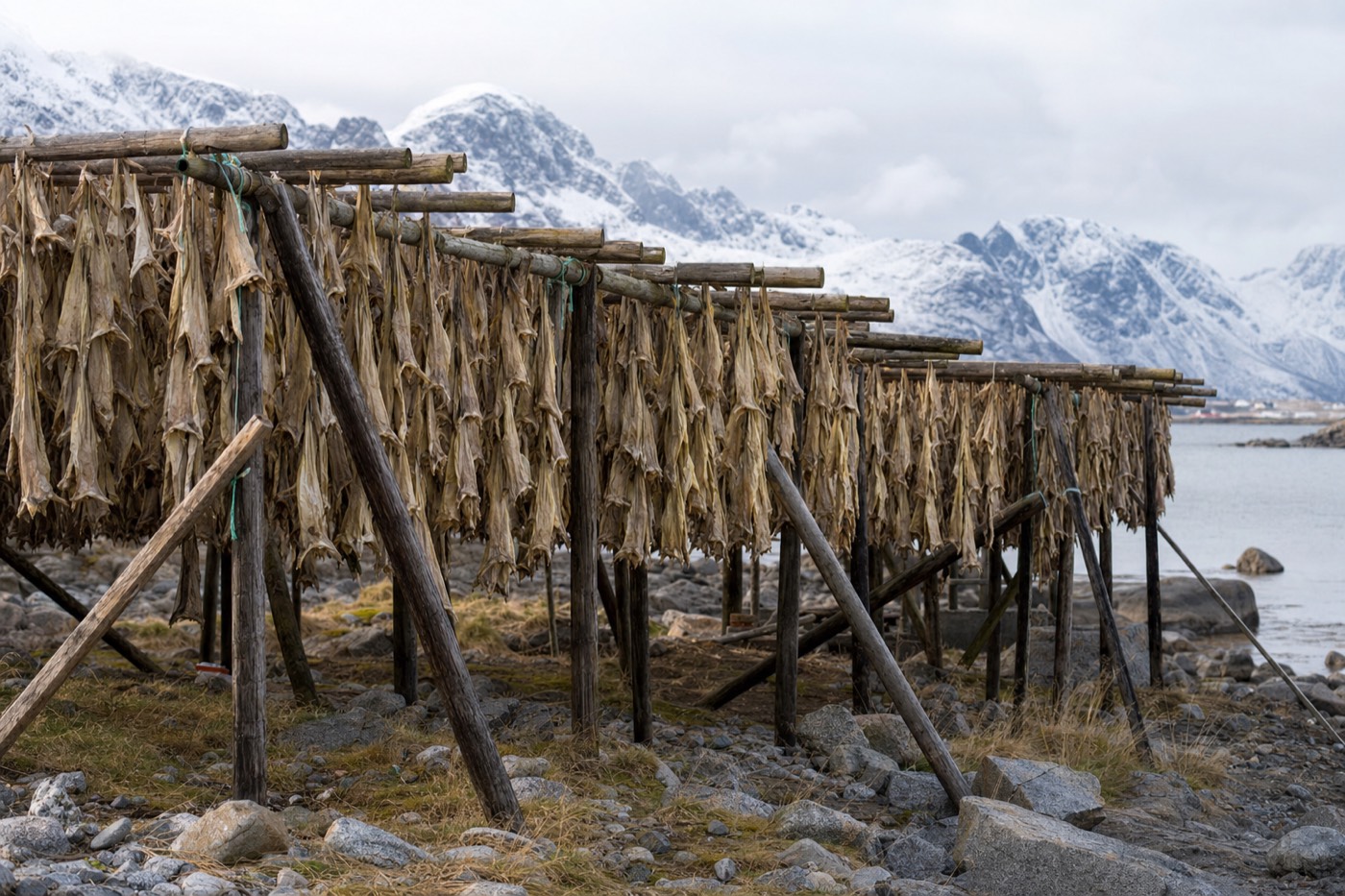
Almost every Lofoten photo essay includes a shot of wooden racks hung with drying fish, usually with no real explanation of what is on them or why. It is worth the explanation: this is not decoration, and it is not history staged for visitors. It is a working export industry that predates most European nations in something close to its current form.
From migration to export: the skrei season
Figures from Visit Lofoten's own skrei and stockfish page and the Lofoten Fishery's documented history.
For a guided option: Discover Henningsvær and Svinøya history tour
What is skrei, and why does it matter so much here?
Skrei is mature Arctic cod that migrates every year from the Barents Sea, hundreds of kilometres north, down to spawn in the sheltered waters of the Vestfjord around Lofoten, arriving in genuinely large numbers between roughly January and April. This annual migration is the entire reason Lofoten's winter fishery exists in the form it does; the cod do the travelling, and the fishery is built around intercepting them at exactly the point they arrive to spawn.
| Month | Skrei activity |
|---|---|
| January | Migration and fishery ramping up |
| February-March | Peak of the Lofotfisket, the main fishing season |
| April | Season winding down as spawning completes |
| May-December | Skrei absent from these waters; other cod and species fished instead |
What is the Lofotfisket, and how long has it run?
The Lofotfisket is the name for this seasonal cod fishery, and it has operated in some form for close to a thousand years, making it one of the longest continuously running fisheries anywhere in the world, not a modern industry dressed up with historical framing. The trade in dried fish between Lofoten and continental Europe is documented as far back as the early 12th century, which puts the region's export economy on a timeline most European industries cannot match.
What is stockfish, and how is it actually made?
Stockfish, tørrfisk in Norwegian, is whole cod hung to air-dry on wooden A-frame racks in Lofoten's cold, windy winter climate, with no salt, additives or preservatives of any kind, a slow natural drying and maturation process that takes months and concentrates the fish's flavour rather than simply preserving it. The method is essentially unchanged from Viking-era practice, the same climate conditions, wind and cold without hard freezing, that made Lofoten specifically suited to this technique a thousand years ago still apply today.
| Stage | What happens |
|---|---|
| Catch and preparation | Fresh skrei is cleaned and hung whole, in pairs, over wooden rails |
| Air-drying | Cold, wind-driven natural drying over the following weeks and months, no artificial heat |
| Maturation | Continued slow drying deepens flavour over an extended period |
| Result | Stockfish, ready for export or local use, with no additives at any stage |
Why did this become internationally significant, not just a local food?
Stockfish from Lofoten has represented the majority of Norway's export value across a period of the country's history spanning more than 500 years, and it holds the distinction of being one of the first two Norwegian foods to receive European Protected Geographical Indication status, the same category of protection given to products like Parmigiano Reggiano and Aceto Balsamico di Modena. That legal protection reflects something real: stockfish made specifically in Lofoten's particular winter climate is treated, by European regulation, as a genuinely distinct product from dried cod made elsewhere.
| Fact | Detail |
|---|---|
| Documented export trade begins | Early 12th century |
| Historical export significance | Majority of Norway's export value for a period exceeding 500 years |
| Modern legal status | EU Protected Geographical Indication (PGI), one of the first two Norwegian foods to receive it |
| Additives used | None; natural air-drying and maturation only |
What is a rorbu, and how does it connect to this history?
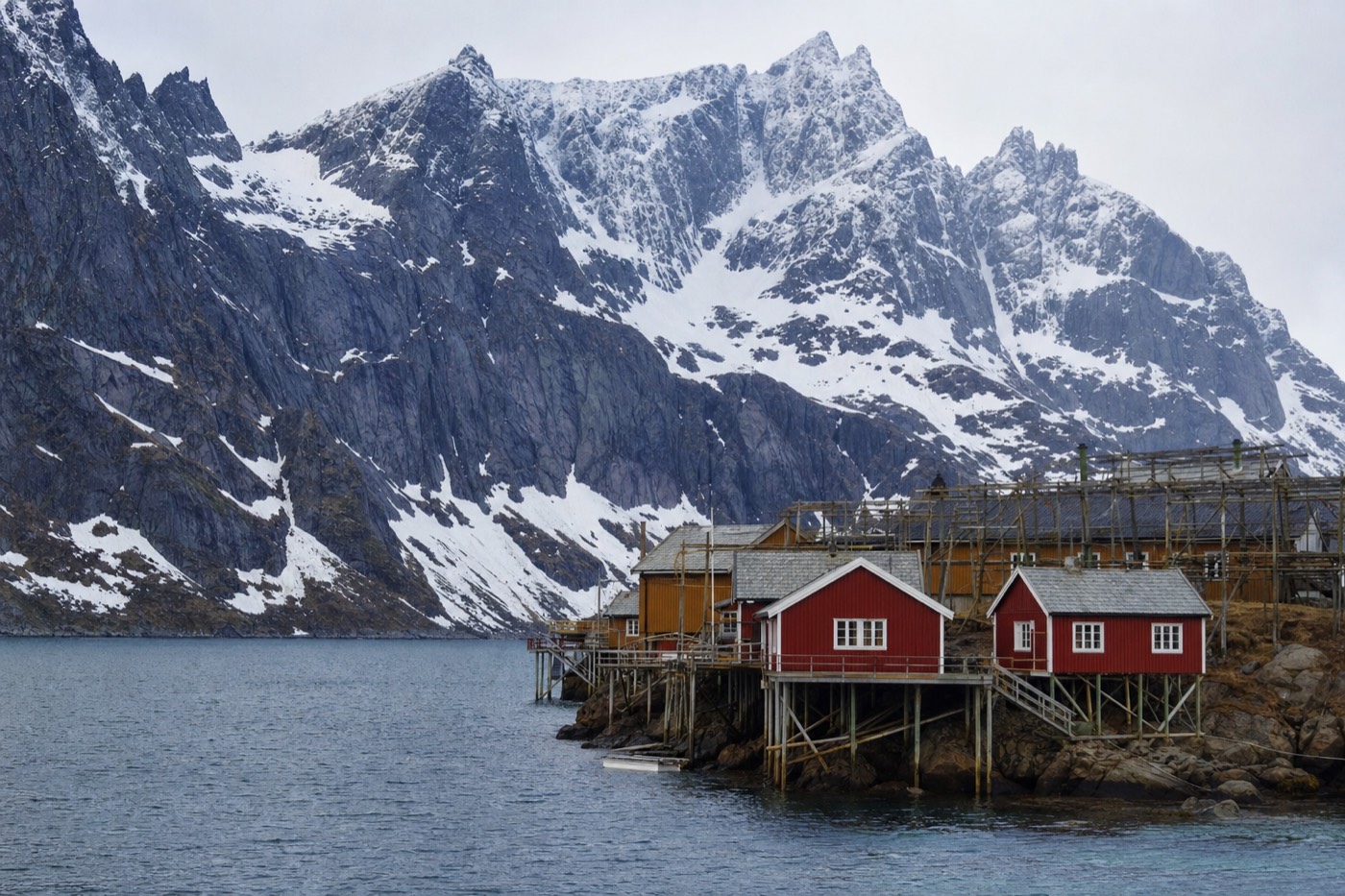
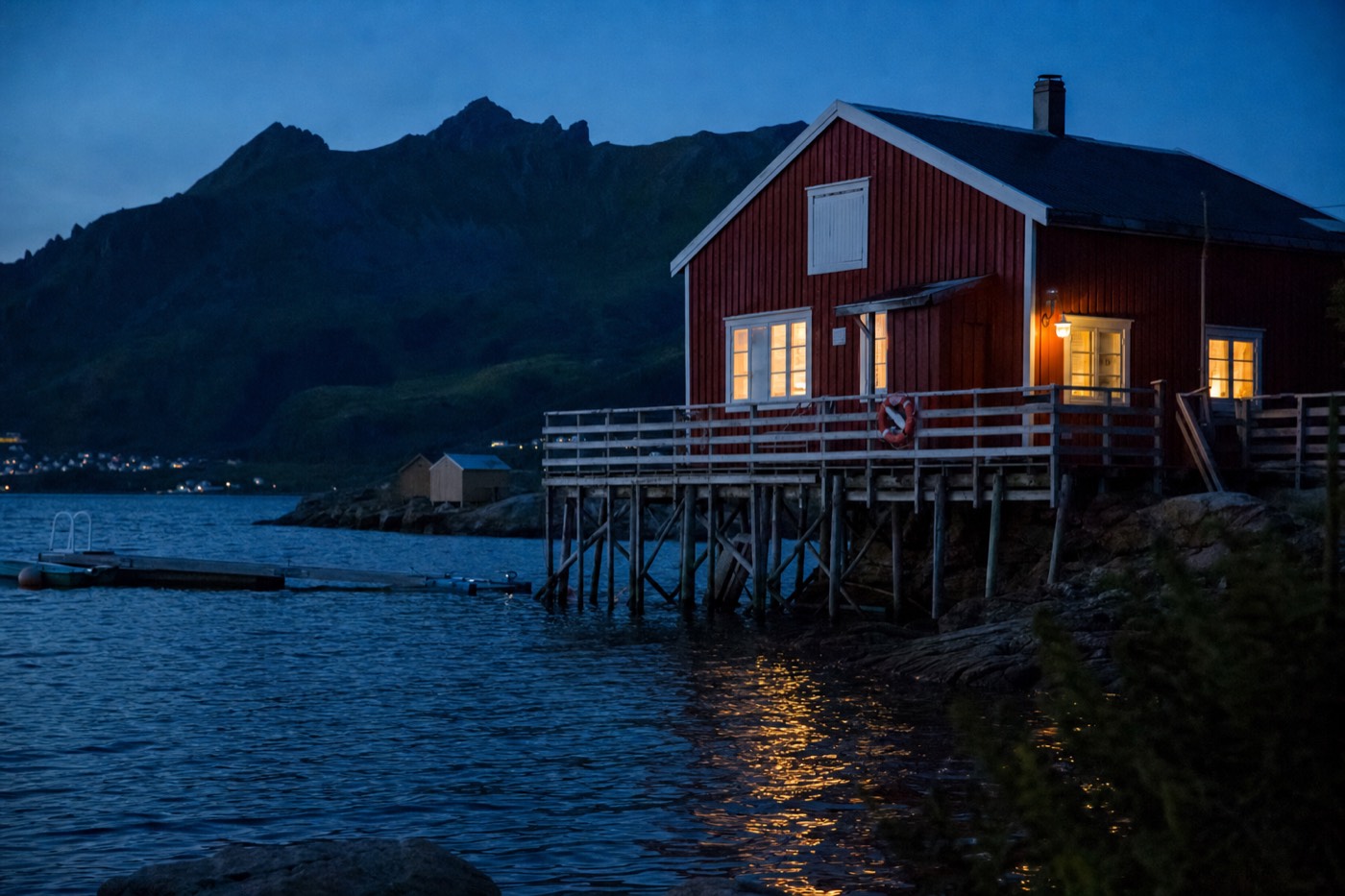
A rorbu is a traditional wooden fisherman's cabin built on stilts directly over the water, originally seasonal housing built specifically for the crews who travelled to Lofoten each winter to work the skrei season, since the local population alone could never have crewed a fishery of this scale. The same red cabins now rented out as visitor accommodation across the archipelago, including the well-known cluster at Hamnøy, are direct descendants of that functional, seasonal-worker housing, not a style invented for tourism.
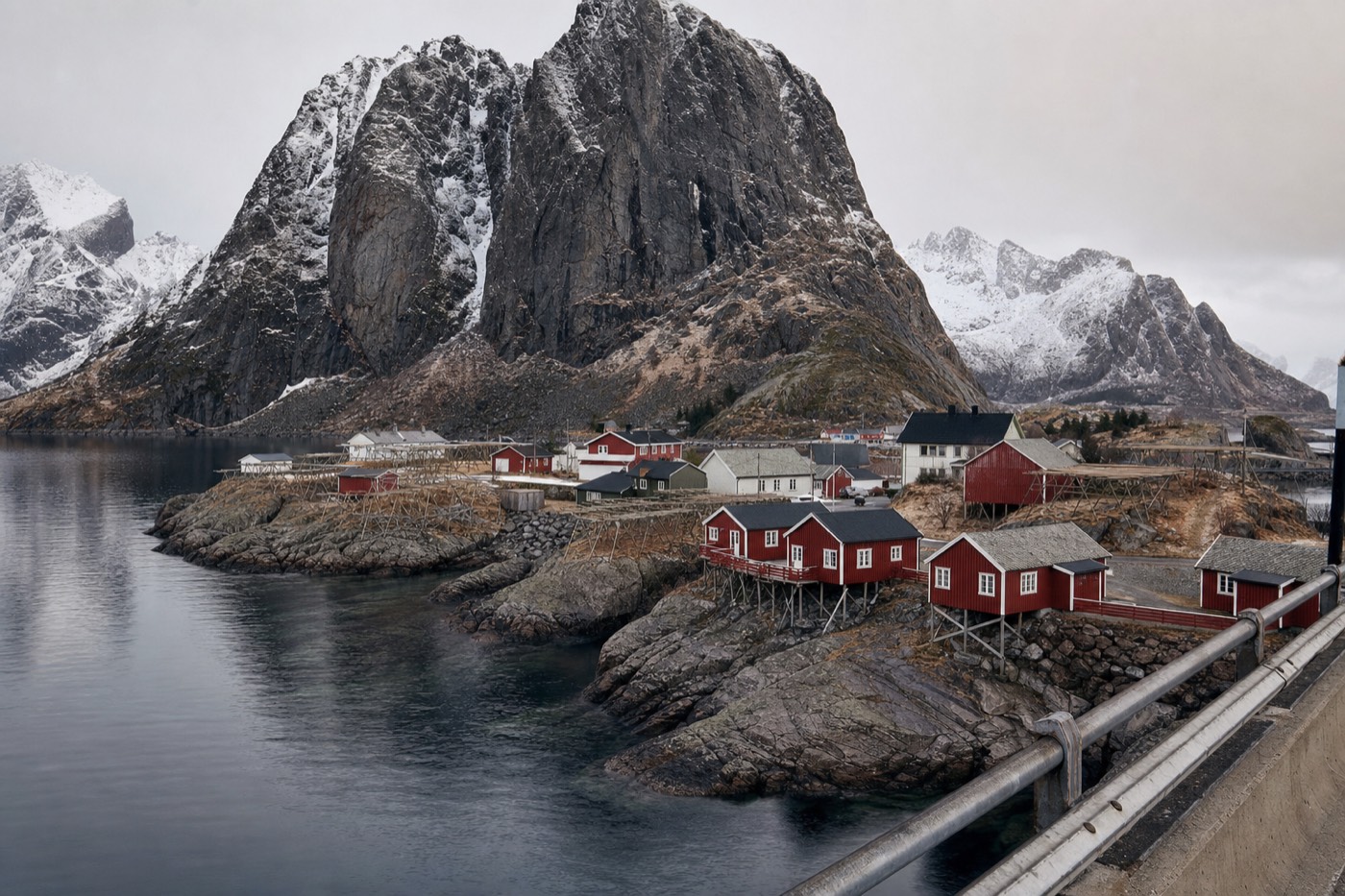
| Then | Now | |
|---|---|---|
| Who used them | Seasonal fishing crews, often from elsewhere in Norway | Visitors, as a distinctive style of accommodation |
| Purpose | Basic, functional housing close to the boats and drying racks | A comfortable, historically rooted place to stay |
| Season of use | Winter, timed to the Lofotfisket | Year-round tourist accommodation |
Can you actually see any of this happening today?
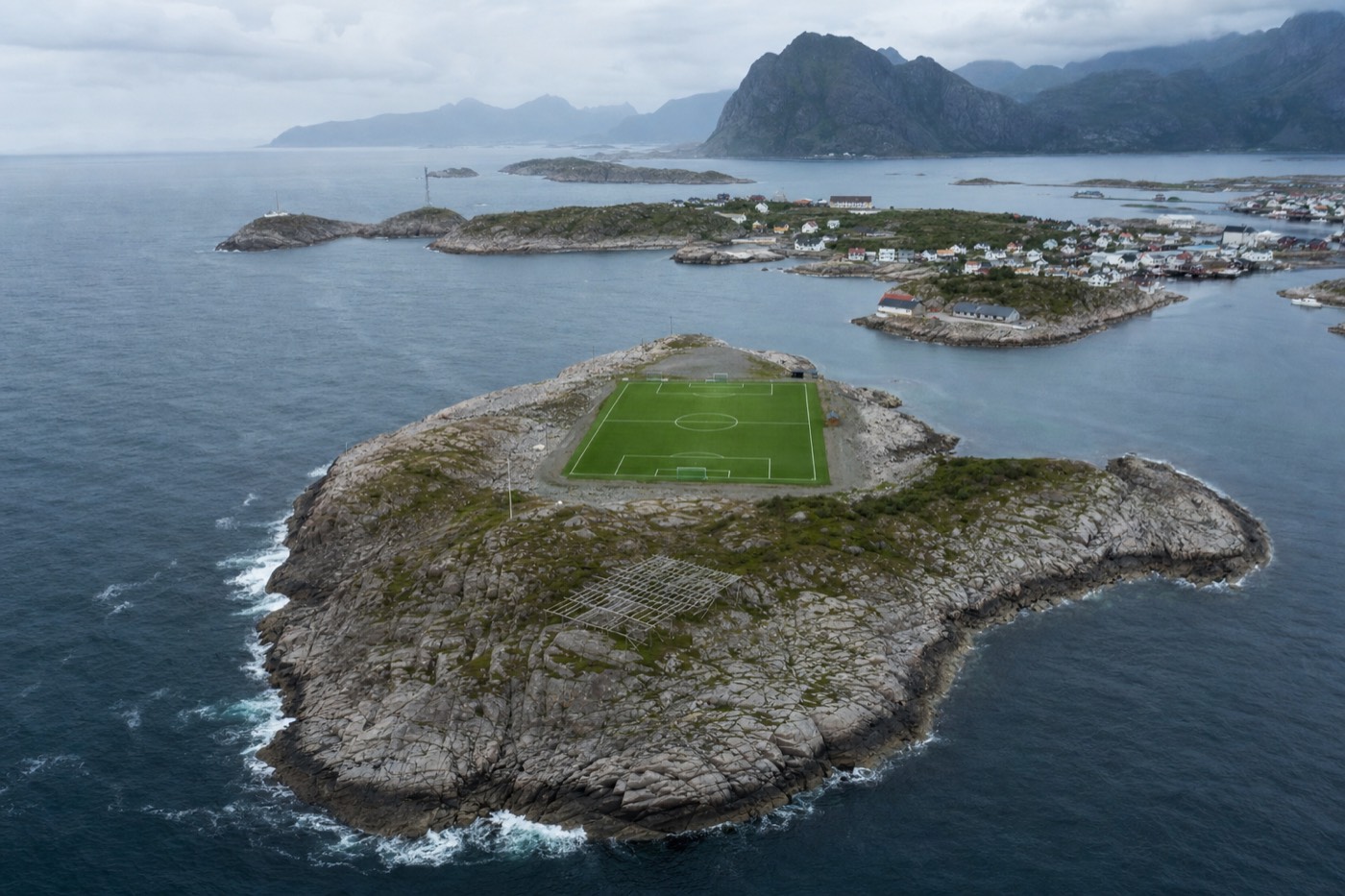
Yes, genuinely, not staged for tourists: February and March bring real boats delivering real catch to piers across the archipelago, with Henningsvær's harbour one of the more accessible places to see the working season in action, and the wooden drying racks seen along the E10 and around villages like Å carry real fish in season, not props. Outside the January-April window, the racks stand empty, which is itself informative: their use is genuinely seasonal, not a permanent display.
| Where | What you might see | Best months |
|---|---|---|
| Henningsvær harbour | Boats delivering catch, working pier activity | February-March |
| Drying racks along the E10 and near Å | Fresh skrei hung to dry | January-April, with racks visible but empty other months |
| Hovsund, on the horseback riding route | Traditional fish-drying racks along the coastal trail | Year-round for the racks themselves; active drying is seasonal |
| A hand-line fishing trip on this site | The actual technique, gear and history explained by a working crew | Year-round, with skrei specifically in season January-April |
Can visitors actually taste stockfish or fresh skrei?
Yes, though this site does not run restaurants or make specific dining recommendations: skrei and stockfish dishes appear on many Lofoten menus during and after the January-April season, and asking locally about what is currently being served is a more reliable guide than any fixed list, since availability genuinely follows the season. A traditional hand-line fishing trip, where the crew often teaches filleting and some visitors take their catch home to cook, is the most direct way to connect the whole process, from cold water to plate, in a single afternoon.
What are the most common misconceptions about this tradition?
| Misconception | Reality |
|---|---|
| The drying racks are decorative or historical only | They are in active, working use every skrei season, January through April |
| Rorbuer were always tourist accommodation | They were originally functional seasonal housing for fishing crews, only recently repurposed for visitors |
| Stockfish is a small, local specialty food | It carried the majority of Norway's export value for over 500 years and still holds EU-protected status today |
| The fishing tradition has faded into tourism | The Lofotfisket is a real, currently active commercial fishery, not a preserved heritage display |
Where does Lofoten's stockfish actually go today?
Norway exported nearly 2,900 tonnes of stockfish in 2025 worth roughly NOK 899 million, with Italy, Croatia and Nigeria standing as the largest markets; Italy in particular has deep, centuries-old culinary traditions built around it, turning up in regional dishes like baccalà alla vicentina, while West African markets, especially Nigeria, favour volume-based cuts and formats. This is not a fading niche trade: stockfish today reaches more than 30 countries, a genuinely global export footprint for a product still made almost entirely by hand, on wooden racks, in a handful of Arctic Norwegian archipelagos.
| Market | How stockfish is typically used there |
|---|---|
| Italy | Premium whole stockfish, deep culinary tradition (e.g. baccalà alla vicentina) |
| Nigeria and West Africa | Volume-based formats and cutlets |
| Croatia and other European markets | Established, longstanding demand |
Is the Lofotfisket still regulated the way it was historically?
No, and that difference matters: the historical Lofotfisket that shaped the region for centuries operated with far fewer restrictions than today's fishery, which now runs under Norway's modern quota system managed jointly with other North Atlantic nations to keep cod stocks sustainable, a genuinely different management regime from the largely open-access fishery of a century ago. The core rhythm, skrei arriving each winter, boats working the season, catch landed and dried, is unchanged; the regulatory framework around it is entirely modern.
How did this fishing economy actually shape Lofoten's villages?
Almost every visible feature of a Lofoten fishing village traces back to the practical needs of the Lofotfisket: harbours positioned for sheltered boat access, rorbuer built close to both the water and the drying racks to minimise the distance fish had to be carried, and village layouts that cluster tightly around a working harbour rather than spreading inland. This is worth remembering while walking through villages like Henningsvær or Reine: the "picturesque" layout so often photographed is a direct, practical result of centuries of fishing logistics, not a planning choice made for visual appeal.
| Village feature | Fishing-economy origin |
|---|---|
| Tight clustering around the harbour | Minimising the distance from boat to processing to drying rack |
| Rorbuer built on stilts over water | Direct boat access and space efficiency on limited buildable land |
| Drying racks positioned on open, windy ground | Wind, not sun, is the main driver of the natural drying process |
How does this history connect to the tours bookable on this site?
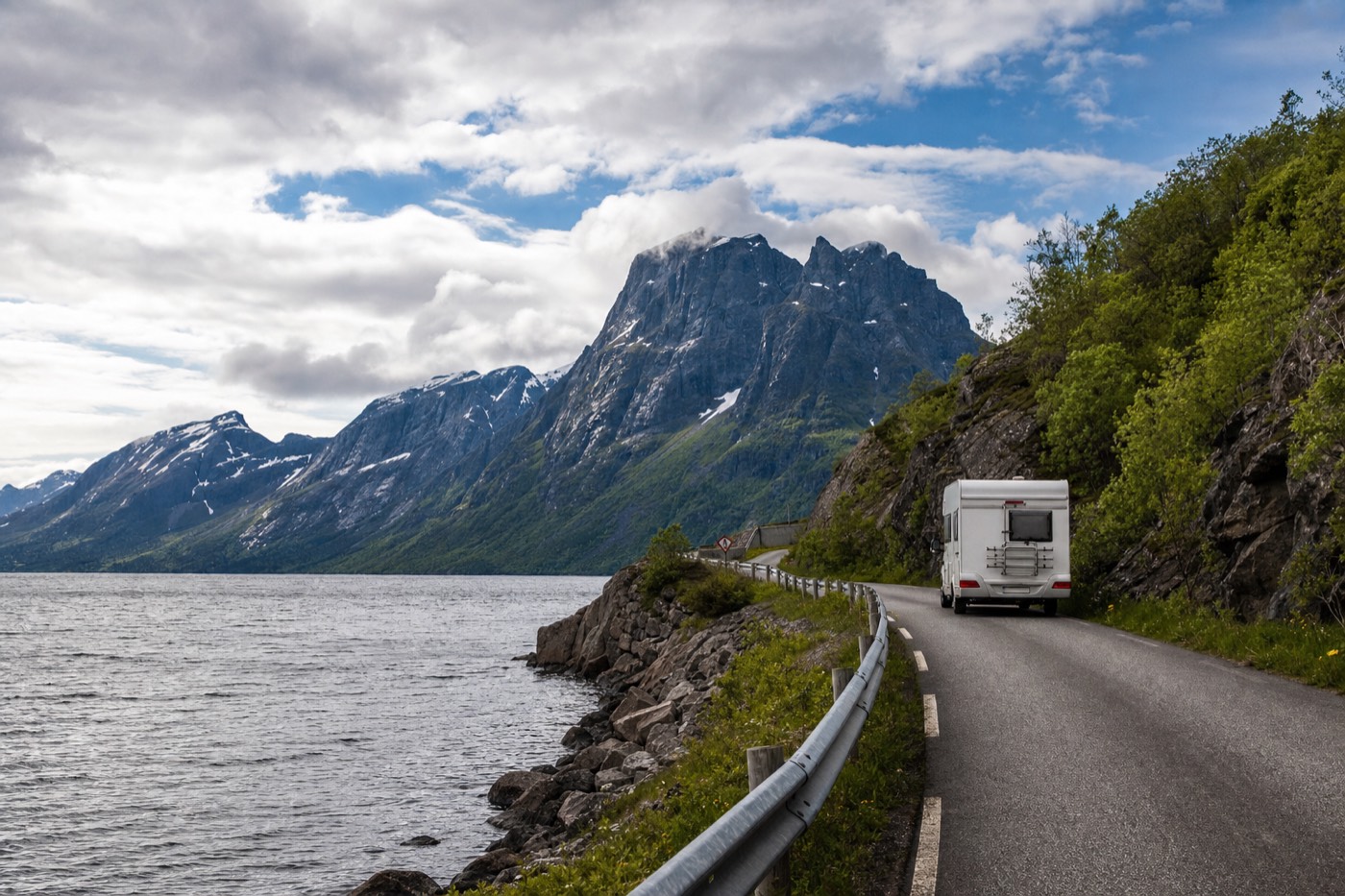
Directly: the traditional hand-line fishing trip aboard the MS Symra and the general fishing boat trip from Svolvær both put visitors into a version of the same working fishery described here, using comparable gear and techniques, with crews who share the region's fishing history as part of the trip rather than as a separate lecture. Neither trip is a re-enactment; both operate on the same waters this history describes. The guided horseback route past Hovsund's own working drying racks offers a third, slower angle on the same tradition, seen from the coastal trail rather than from a boat. However you choose to experience it, on the water, on horseback, or simply parked beside a rack full of drying cod, the same thousand-year rhythm is what you are actually looking at. Very few places in the world let a visitor stand next to a genuinely unbroken thousand-year-old export industry on a normal afternoon; Lofoten, almost by accident of geography, is one of them. The cold, the wind and the specific angle of this coast toward the Barents Sea are not incidental scenery; they are the actual working conditions that make the stockfish trade possible at all, which is worth remembering the next time a photograph of a drying rack shows up captioned only as "picturesque." Understanding that working reality, rather than only its visual surface, is the difference between passing through Lofoten and actually seeing it.
Does the smell and physical presence of the drying racks surprise visitors?
Often, yes: a large active drying operation has a genuine, strong smell, distinctly of fish and salt air, that photographs never convey, and standing close to a full rack in peak season is a noticeably more sensory experience than the visual-only impression most visitors arrive with. This is worth mentioning honestly rather than glossing over; it is not unpleasant to most visitors, simply unexpected, and it is part of what separates seeing a working rack in person from seeing one in a photograph.
Lofoten's coastline is easy to enjoy purely as scenery. Understanding what the drying racks, the red cabins and the winter boat traffic actually represent turns the same view into something with a real, thousand-year story behind it. For the village where this working tradition is most visible day to day, see the Henningsvær guide.